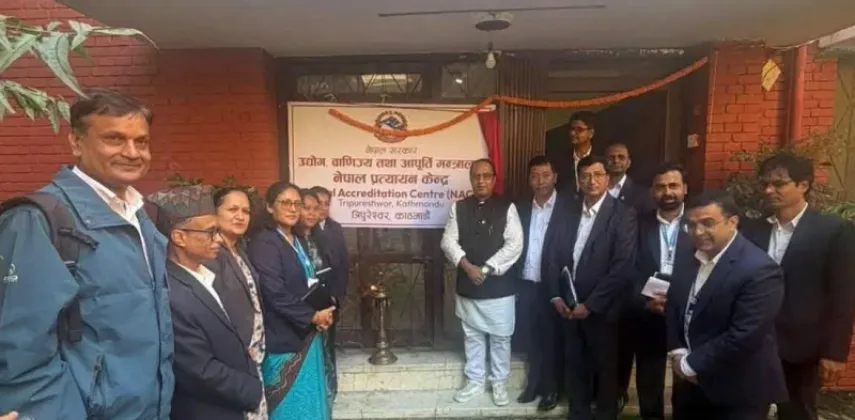
Nepal has moved to strengthen its national quality system with the establishment of a Nepal Accreditation Centre, a new institution intended to support industrial development and facilitate trade, according to reports published by Nepali media on November 4 and 5, 2026. The centre is expected to reinforce the country's accreditation framework and its wider quality infrastructure, filling a gap that has long affected manufacturers, exporters and service providers seeking recognition for their products and processes at home and abroad. According to a report by Nepal Lead, the initiative is also linked to the educational sector, suggesting that its mandate is being viewed through both an economic and a human-resource lens.
A new pillar of Nepal's quality infrastructure
Accreditation is widely regarded as the backbone of a functioning national quality infrastructure, alongside standardization, metrology and conformity assessment. An accreditation centre serves as the authoritative body that evaluates and formally recognizes the competence of organizations that test, certify and inspect products, systems and services. With the Nepal Accreditation Centre now in place, the country gains an institution expected to anchor this function and provide structured oversight of quality-related bodies.
While detailed operational blueprints have yet to be widely reported, accreditation centres of this kind are generally expected to carry out functions such as:
- Assessing the technical competence of testing and calibration laboratories so that their results can be trusted by regulators, buyers and trading partners.
- Accrediting certification bodies that audit companies against national and international standards.
- Recognizing inspection bodies whose assessments underpin compliance in areas such as safety, construction and food.
- Maintaining impartiality and consistency in how conformity assessment is carried out across the economy.
For Nepal, where reports indicate the move is tied to industrial development, the establishment of such a centre signals an effort to give domestic industry a credible mechanism for demonstrating quality. This matters in sectors where buyers, whether government procurement agencies or foreign importers, increasingly demand documented proof that products and processes meet recognized standards.
Why accreditation matters for trade facilitation
The link between accreditation and trade is one of the clearest rationales behind the new centre. In international commerce, conformity assessment results issued in one country are not always accepted in another unless they carry the backing of a recognized accreditation body. Exporters can consequently face repeated testing, duplicate certifications and added costs when their documents are questioned at borders or by overseas buyers.
A functioning national accreditation system is designed to ease precisely these frictions. When laboratories and certification bodies operating in Nepal are accredited against internationally accepted criteria, their reports and certificates carry greater weight with trading partners. This can translate into:
- Reduced duplication of testing and certification for export consignments.
- Lower compliance costs for small and medium-sized enterprises seeking to enter foreign markets.
- Faster clearance of goods, since accredited documentation is less likely to be disputed.
- Greater confidence among foreign buyers in the reliability of Nepali products and services.
It is in this sense that the centre is being described as a trade facilitation measure. By strengthening the credibility of conformity assessment within the country, it aims to make it easier for Nepali goods to move into regional and global markets, while also giving domestic consumers and regulators a dependable reference point for product quality.
A connection to the education sector
Unusually for an industrial and trade-focused body, reports indicate that the establishment of the Nepal Accreditation Centre is also connected to the educational sector. While the full scope of this linkage has not been elaborated in early coverage, accreditation frameworks commonly intersect with education in several ways, and the dual economic-educational framing suggests a broad vision for the institution.
Quality assurance in education and training is itself a form of accreditation, and a national centre with expertise in evaluating competence can play a role in ensuring that technical and vocational programmes produce graduates who meet industry requirements. For industry, this matters because standards compliance depends on skilled personnel, from laboratory technicians to auditors and inspectors. For students and institutions, credible accreditation provides a benchmark that qualifications earned in Nepal can be understood and trusted, including by employers and academic bodies beyond the country's borders.
The connection also reflects a growing recognition that industrial development and human capital development are mutually reinforcing. A quality infrastructure that certifies products is only as strong as the people who operate it, and an education system aligned with accreditation norms can supply the workforce that industry needs to compete.
Looking ahead
The reports of November 4 and 5, 2026 mark an early stage in public awareness of the new centre, and key details, including its institutional structure, legal basis, staffing and rollout timeline, remain to be fully outlined in the available coverage. Stakeholders in industry, trade and education will likely be watching how the centre translates its mandate into concrete accreditation services, and how quickly its decisions gain recognition among trading partners.
What is already clear from the early reporting is the intent behind the institution. By creating a dedicated national body for accreditation, Nepal is positioning quality as a strategic asset for its economy, one that supports factories seeking to upgrade, exporters seeking market access and institutions seeking to build a skilled, credentialed workforce. If the centre delivers on the expectations outlined in the initial reports, it could become a quiet but consequential piece of the country's development architecture, ensuring that the phrase "made in Nepal" is backed by systems of verification that both domestic and international stakeholders can rely on. Further details are expected to emerge as coverage of the initiative continues.