
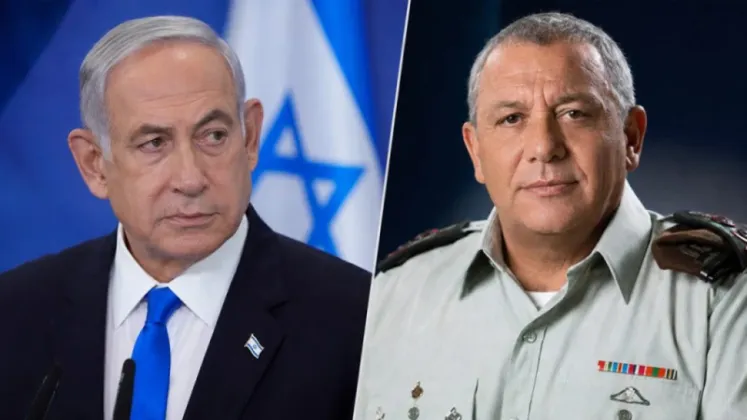
Neither Israel’s ruling coalition nor the opposition alliance secured a majority in the country’s elections, leaving both blocs short of the numbers needed to form a government on their own, according to reports. The result means neither side can claim a clear majority mandate from the election outcome, while the broader pattern remains unchanged: no single party has ever won an outright majority in Israel’s history.
Both political blocs fall short
The reported outcome leaves the ruling coalition and its opposition counterpart in a similar position on the central question of government formation. Neither bloc has enough support to govern independently, so the election has not delivered a majority for either side. The results establish a limit on what each alliance can do on its own, even though they do not, by themselves, show which side may ultimately be able to assemble sufficient backing.
The distinction between a party and a bloc is important. The reports do not describe a single party winning an outright majority, and they also say that neither of the two larger political alignments has reached the numbers required to form a government independently. In other words, the result is not a straightforward victory that gives one side the ability to govern without seeking support beyond its existing grouping.
The outcome has been reported by Nepal Views and Nepal Lead. Both accounts describe an election in which neither the ruling side nor the opposition alliance obtained a majority. The reports do not identify a bloc with enough numbers to form a government without additional support.
A recurring feature of Israeli elections
The lack of an outright majority for any single party is not presented as a new development. Reports note that no party in Israel’s history has ever achieved a single-party majority. The current result therefore fits a longer-running pattern rather than representing a break from the country’s political record.
That historical context helps explain why the outcome should be understood in terms of blocs as well as individual parties. A party may be part of a wider political alliance, but the reported results still leave the two main groupings short of the numbers each would need to govern alone. The central fact is not simply that no party won outright; it is that neither of the competing blocs has independently reached the threshold needed to form a government.
What the result means for government formation
With both blocs short of a majority, the election has not produced a government-forming result for either side acting alone. Any path forward would require support beyond the existing numbers held by a bloc, or another arrangement that changes the balance of backing. The reports, however, do not specify what arrangements may be pursued, which parties might provide support, or whether either side is more likely to secure the numbers required.
The available information also does not provide seat totals, vote shares, or a detailed breakdown of party results. It therefore does not establish how large the gap is for either bloc or how the balance compares between them. What it does make clear is that neither the ruling coalition nor the opposition alliance has reached a majority independently, and that no single party has ever won an outright majority in Israel.
For now, the election leaves both political sides without the numbers to form a government on their own. The next question is whether either can obtain the additional backing needed to move beyond that position. Until such support is established, the reported result remains one of a divided contest, with no outright majority winner and no bloc able to govern independently.


