
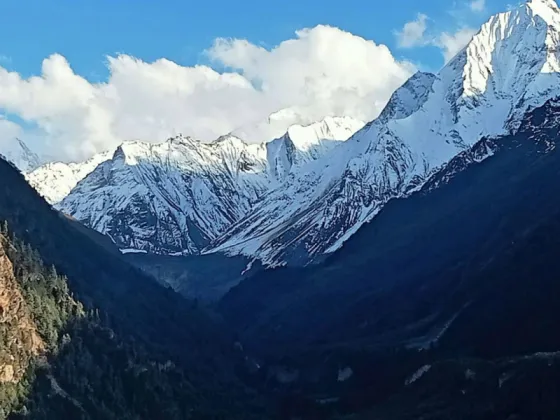
The trekking route to Nampa Himal Base Camp in Darchula district has been re-studied to identify and promote the mountain tourism potential of Sudurpaschim Province, with a study and monitoring team departing for the field visit on Asoj 26. The re-examination of the base camp trail was organised by the Nepal Mountaineering Association's (NMA) Sudurpaschim Province committee, working in coordination with Byans Rural Municipality of Darchula, and focused on collecting data on the mountains of the area as well as assessing the present condition of the trekking route.
The initiative marks a renewed effort to take a closer look at one of the far-western region's mountain destinations, which until now has remained outside the mainstream of Nepal's trekking circuit. As reported by Nepal Press, the exercise was designed to serve the broader goal of developing and promoting mountain tourism across Sudurpaschim Province.
What the Re-Study Set Out to Do
The study team that departed on Asoj 26 carried a two-fold mandate. First, it was tasked with gathering data on the mountains located along and around the Nampa Himal Base Camp trekking route. Second, it was to examine and assess the actual condition of the trail that trekkers would use to reach the base camp.
According to the information shared through the NMA's provincial committee, the re-study was conceived as both a research and a monitoring exercise:
- Mountain data collection: Documenting information on the peaks and mountain features of the Nampa Himal area in Darchula.
- Trail condition assessment: Reviewing the state of the existing trekking path to the base camp to understand what shape the route is in.
- Tourism potential identification: Using the findings to identify opportunities for promoting mountain tourism in Sudurpaschim Province.
Such on-the-ground assessments are regarded as a foundational step for any trekking destination, since decisions about route promotion, trail improvement, and tourism planning generally depend on reliable first-hand data rather than second-hand estimates.
A Joint Effort by NMA and Byans Rural Municipality
The re-study was organised by the Nepal Mountaineering Association's Sudurpaschim Province committee, the provincial wing of the country's mountaineering body, and was carried out with the coordination of Byans Rural Municipality, the local unit in Darchula district where the Nampa Himal area falls. This collaboration between a mountaineering organisation and local government reflects the kind of partnership considered necessary to develop trekking routes in remote mountain areas, where local authorities manage the terrain and community stakes, while sectoral bodies contribute technical and institutional experience.
Rajdhani Daily also reported on the re-examination, noting that the study and monitoring visit was aimed at identifying the mountain tourism potential of the province. The involvement of the rural municipality is significant because trekking routes ultimately pass through settlements and landscapes under local jurisdiction, and the sustainability of any base camp route is closely tied to the engagement of the local level.
Mountain Tourism in Sudurpaschim Province
Sudurpaschim Province, in Nepal's far-west, has often been described as a frontier of the country's tourism economy, with its mountains receiving far less promotion than the better-known ranges of central and eastern Nepal. Nampa Himal, the destination of the route under study, is a mountain located in Darchula district, and the trail to its base camp represents one of the province's mountain tourism assets.
The re-study of the base camp route is positioned within this larger picture. By collecting data on the mountains and evaluating the trekking trail, the exercise aims to generate the basic information needed to bring the Nampa Himal area into the conversation about Nepal's trekking destinations. For a province seeking to expand its tourism profile, identifying viable base camp routes is a way to translate existing natural endowments into products that can attract visitors.
The timing of the visit, with the team departing on Asoj 26, also points to the practical nature of the exercise: rather than remaining a desk-level discussion, the assessment involved sending a team to the route itself to observe conditions directly.
Why the Route Re-Examination Matters
Re-studies of this nature serve several purposes for a developing trekking destination. An updated picture of the trail's condition helps determine what kind of attention the route may need, while documented data on the mountains of the area contributes to an inventory that tourism promoters and planners can draw upon. For the NMA's provincial committee, the findings are expected to support its stated objective of promoting mountain tourism in Sudurpaschim Province.
The exercise also underscores a growing attention to the far west within Nepal's mountaineering and trekking sector. With national tourism efforts traditionally concentrated on established routes, provincial-level bodies and local governments have increasingly taken the lead in examining the potential of their own mountain areas. The Nampa Himal Base Camp route re-study, conducted jointly by the NMA Sudurpaschim Province committee and Byans Rural Municipality, fits squarely within that trend.
As the team's findings from the route and the mountain data collection are processed, the study is expected to contribute to the identification and subsequent promotion of the trekking route, in line with the broader push to develop Darchula's mountain tourism potential and place Sudurpaschim Province's peaks on the country's trekking map.


