
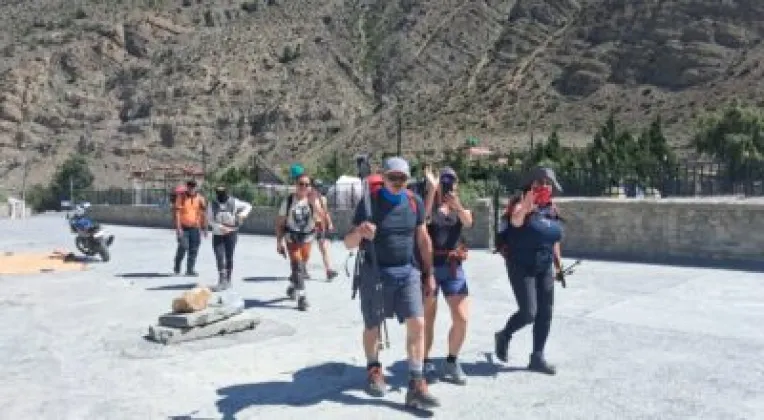
Mustang district received 285,616 foreign tourists in the first ten months of 2026, according to figures released by the Annapurna Conservation Area Project (ACAP) office in Jomsom. The office, which functions under the National Trust for Nature Conservation (NTNC), compiled the data for the period from January to October, covering arrivals from both SAARC member states and countries beyond the South Asian region. The ten-month tally underlines the trans-Himalayan district's continued standing as one of Nepal's most visited destinations and a vital contributor to the country's tourism economy.
SAARC Visitors Lead the Arrivals
The breakdown of the arrivals, as reported by ACAP Jomsom and carried by news outlets including Khabarhub, Gorkhapatra Online and RatoPati, shows the dominance of regional travelers in Mustang's foreign tourist flow:
- Total foreign arrivals (January to October 2026): 285,616
- Tourists from SAARC countries: 262,012
- Tourists from other countries: 28,275
The overwhelming share of visitors arriving from SAARC countries is consistent with a long-established pattern in the district. Mustang has traditionally drawn large numbers of pilgrims and travelers from India and other neighboring SAARC nations, many of whom journey to the area on religious circuits that are accessible by road and can be completed in a relatively short time. Regional visitors typically arrive in high volumes throughout the year, providing a steady base of customers for the hotels, lodges, restaurants and transport operators that line the district's main corridors.
Muktinath's Enduring Appeal
At the heart of the district's regional popularity sits Muktinath Temple, located at an altitude of roughly 3,800 meters in the lower Mustang region. The site holds deep religious significance for both Hindus and Buddhists, making it a rare dual-destination pilgrimage shrine, and it remains one of the most sought-after religious sites for South Asian travelers in Nepal. Improving road connectivity from Pokhara and Beni has made the pilgrimage considerably easier in recent years, allowing pilgrims to reach Jomsom and Muktinath by jeep and bus in addition to the traditional trekking and flight routes through Jomsom Airport.
The Role of ACAP and Conservation Tourism
The arrival figures were recorded and published by ACAP Jomsom, the district-level office of the Annapurna Conservation Area Project. Established in 1986, ACAP is Nepal's largest conservation area, spreading across five districts, including Mustang, Manang, Kaski, Lamjung and Myagdi, and it is managed by the NTNC, an autonomous conservation body operating in the country for over four decades. The Jomsom office maintains its tourist records through the permit and checkpoint system at the conservation area's entry points, which is why its statistics are widely regarded as the authoritative measure of visitor flow in the district.
Tourism in the conservation area operates on a model that links visitor entry fees directly to conservation and community development. Revenues collected from tourists help fund forest conservation, alternative energy initiatives, trail maintenance and local livelihood programs across the Annapurna region. In this sense, every tourist recorded at the Jomsom entry points contributes not only to the district's business economy but also to the financing of the environmental protection that keeps the region attractive in the first place.
Why Mustang Continues to Draw the World
Beyond pilgrimage, Mustang offers a combination of landscape, culture and adventure that few destinations in Nepal can match. The district lies along the Kali Gandaki river valley, which cuts between the Dhaulagiri and Annapurna massifs and is widely described as one of the deepest gorges in the world. The famous Annapurna Circuit trekking route passes through the lower part of the district, taking trekkers through villages such as Kagbeni, Marpha and Jomsom, which are known for their whitewashed houses, apple orchards and traditional distilleries.
Upper Mustang, the northern reaches of the district bordering Tibet, adds another layer of appeal. Long maintained as a restricted area that requires a special permit in addition to standard conservation area entry documents, it preserves a distinctly Tibetan Buddhist culture, centuries-old cave dwellings and Lo Manthang, the historic walled city that once served as the seat of the Mustang kingdom. This combination of restricted-access mystique and cultural richness has made Upper Mustang a premium trekking destination for visitors from outside the SAARC region, even though their numbers remain far smaller than the regional pilgrim flow.
A Strong Signal for the Tourism Year
With 285,616 foreign arrivals already recorded through the end of October, Mustang has sustained a heavy flow of visitors across all ten months of 2026, spanning both the peak spring trekking season and the busy autumn period that follows the monsoon. The strength of the SAARC segment in particular reflects the reliability of regional pilgrimage tourism, which is less sensitive to long-haul travel fluctuations and continues to fill hotels and transport services along the Jomsom-Muktinath corridor even outside peak trekking months.
For the local economy of Mustang, where tourism sits alongside agriculture, particularly apple farming, as a pillar of household income, a foreign arrival count of this scale translates into sustained demand for accommodation, food services, mule transport, trekking guides and other support occupations. The figures reported by ACAP Jomsom will also serve as a reference point for tourism authorities and conservation managers as they assess visitor pressure on trails, religious sites and conservation area infrastructure in the months ahead.


