
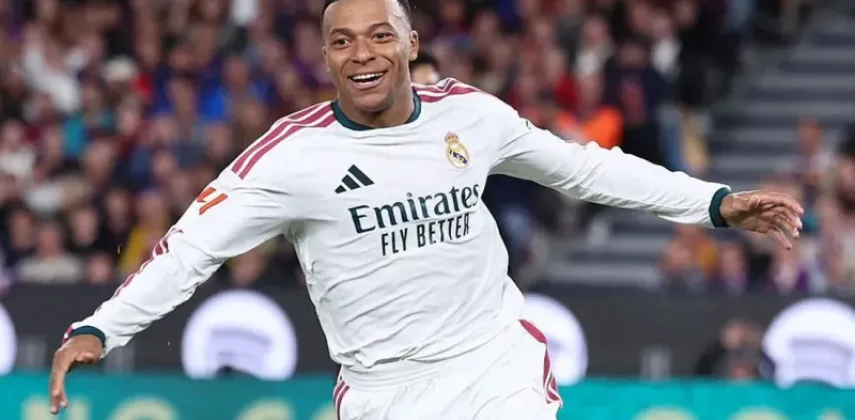
Kylian Mbappe, the captain of the French national football team, has apologised to China after referring to the country's late leader Mao Zedong as a "dictator" in a podcast interview, a remark that ignited a fierce backlash among Chinese fans and cost the star forward a commercial deal in one of the world's most important sports markets. The apology, issued on Tuesday and reported by Reuters, followed days of escalating anger in China, where protests over the alleged remarks intensified as clips from the interview spread across Chinese social media.
A podcast aside that went viral
The controversy began with a video recorded for a French podcast that has since been taken down. In it, Mbappe discussed a meme circulating online in which his face had been photoshopped onto an image of the late Chinese leader. Describing the picture, the France captain referred to the figure in it as "some guy - I think he's a Chinese dictator."
While the remark was made in a casual, French-language setting, its reach changed dramatically once it crossed onto Chinese platforms. Users there read the comment as an insult to Mao Zedong, a figure whose place at the centre of modern Chinese history is protected by both official discourse and popular sentiment. The backlash gathered pace rapidly, and according to Nepal's Ratopati news portal, protests intensified in China over the alleged remarks, turning a fleeting podcast aside into a full-blown controversy for one of football's most marketable athletes.
Apology and commercial fallout
Facing mounting pressure, Mbappe moved to contain the damage. On Tuesday, the France captain apologised to China over the comments, Reuters reported, in an effort to quell the anger that had built up since the podcast clip began circulating.
By that point, however, the fallout had already carried tangible consequences. According to Ratopati, Mbappe was removed from a Chinese brand partnership in the wake of the comments, a decision that underscored how quickly an offhand remark can translate into lost commercial value when it touches politically sensitive ground in China.
The key developments in the affair so far include:
- An apology to China issued by Mbappe on Tuesday, as reported by Reuters
- Intensifying protests in China over the alleged remarks, according to Ratopati
- The forward's removal from a Chinese brand partnership following the backlash
- The original podcast video, which has since been taken down
Why the Mao remark struck a nerve
To understand the scale of the reaction, it helps to consider who Mao Zedong remains in China. Mao led the Communist Party to power in 1949 and governed the country until his death in 1976, and he is officially honoured as the founding father of the People's Republic of China. His portrait overlooks Tiananmen Square in central Beijing, his image appears on Chinese banknotes, and the ruling party continues to present his legacy as central to the nation's story. Describing him as a "dictator" is a characterisation that Chinese authorities and much of the Chinese public firmly reject, and references of that kind are treated as deeply offensive.
Against that backdrop, Mbappe's comment, although delivered in an off-the-cuff discussion about an internet meme, landed with a force that few casual podcast remarks ever reach. The episode is a reminder of the scrutiny that global sports stars now face: remarks made in one media environment can be clipped, translated and re-shared within hours in another, where they are judged by entirely different political and cultural standards. For athletes with endorsement portfolios that stretch into China, the commercial stakes of such misunderstandings are considerable.
Where the episode stands
Mbappe's apology on Tuesday represents the most significant step yet toward defusing the controversy, and no further disciplinary or commercial measures have been reported beyond the brand separation. Still, the episode highlights a challenge that has repeatedly confronted international figures doing business in China: the country's history and its leaders are subjects on which foreign celebrities are expected to tread carefully, and the cost of a misstep can be both reputational and financial.
For Mbappe, the affair arrives at a moment when his profile could hardly be higher. As captain of France and one of the most recognisable footballers in the world, he has built a global brand that extends well beyond the pitch. Whether the apology will be sufficient to fully restore his standing among Chinese fans and sponsors remains to be seen, but the speed of his response reflects a recognition that in the modern sports economy, words spoken in a podcast studio can reverberate all the way to the Chinese market within days.


