
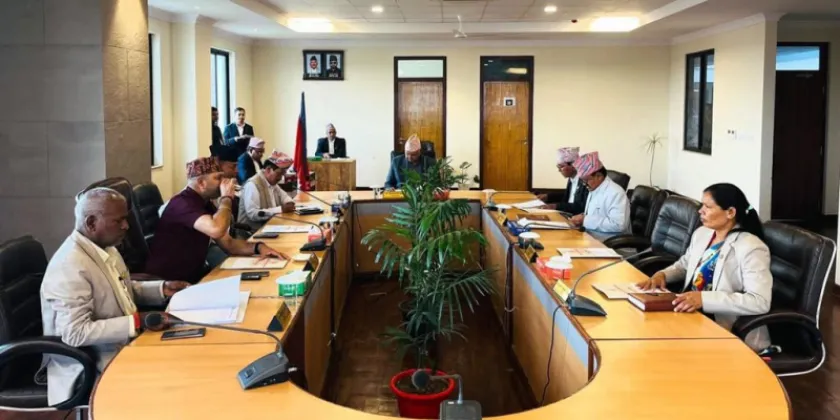
The Lumbini Province Council of Ministers has approved a treatment procedure for persons injured during the country's armed conflict, the people's movements, the Madhes movement and the Gen Z movement, creating an official provincial framework for the care of victims of Nepal's successive waves of political unrest. The decision was taken at a meeting of the provincial cabinet held in Butwal on Tuesday under the chairmanship of Chief Minister Chetnarayan Acharya, as reported by Nepal Press and Ratopati.
The Council of Ministers also approved the annual report on governance reform and good governance for fiscal year 2082/83 at the same sitting, making it the second major decision of the meeting highlighted by both media outlets.
Treatment Procedure, 2083 Cleared by the Cabinet
The headline decision of Tuesday's meeting was the approval of what has been titled the Treatment Procedure, 2083. According to the reports, the procedure applies to persons injured during:
- the armed conflict
- the people's movements
- the Madhes movement
- the Gen Z movement
The suffix 2083 refers to the current year of the Bikram Sambat calendar, in keeping with the common Nepali practice of naming procedural instruments after the year of their adoption. With the cabinet's endorsement, the procedure now stands as the provincial government's formal policy framework for the treatment of persons hurt in these episodes of unrest, spanning events from the earliest years of the insurgency to the youth-led protests of recent months.
Three Decades of Unrest Behind the Decision
The four categories covered by the procedure map directly onto the major flashpoints of Nepal's modern political history. The armed conflict, fought between the state and the then CPN (Maoist) rebels from 1996 to 2006, left more than 17,000 people dead and thousands more injured across the country, with victims spread well beyond the conflict's core zones. The people's movements, most prominently the 1990 uprising that restored multi-party democracy and the 2006 movement that brought the insurgency to an end, likewise produced large numbers of injured demonstrators on the streets.
The Madhes movement, centred in the southern Tarai plains, saw protesters injured during agitations for the rights, representation and inclusion of Madhesi communities in the years that followed the peace process. Most recently, the Gen Z movement brought young Nepalis onto the streets in September 2025 in protests that turned deadly and left many participants and security personnel injured. By naming all four streams of unrest in a single instrument, the Lumbini provincial government has placed victims of very different eras of upheaval under one treatment framework, an approach that observers of Nepal's transitional justice debates have long urged for conflict-affected populations.
Governance Reform Report Also Approved
Alongside the treatment procedure, the Council of Ministers approved the annual report on governance reform and good governance for fiscal year 2082/83. The Nepali fiscal year runs from mid-July to mid-July, meaning fiscal year 2082/83 corresponds to the period from mid-July 2025 to mid-July 2026. With the cabinet's approval, the report now stands as the provincial government's formal account of its reform and good governance efforts during that year.
The approval of such an annual report is a standard element of provincial practice, allowing the government to place its performance on record before the provincial assembly and the wider public. That the report was cleared at the same meeting as the treatment procedure gave the Tuesday sitting a dual character, pairing a forward-looking welfare measure for past victims with an administrative assessment of the government's own conduct.
Lumbini Cabinet Meets in Butwal
Lumbini Province is one of the seven provinces created under Nepal's 2015 constitution, stretching across the Tarai plains and adjoining hills of the country's west and taking its name from Lumbini, the birthplace of Gautam Buddha. Butwal, where the Council of Ministers convened on Tuesday, is one of the province's largest and most commercially active cities. The provincial government is led by Chief Minister Chetnarayan Acharya, who chaired the meeting at which the decisions were adopted.
Both Nepal Press and Ratopati reported on the outcomes of the meeting, with the treatment procedure drawing particular attention given the continuing public debate over the care of those injured in the Gen Z protests. For persons injured across three decades of unrest in Nepal, the cabinet's approval means their treatment will now be governed by an explicit provincial procedure rather than ad hoc arrangements, while the province's own governance record for the past fiscal year has been formally placed on file.


