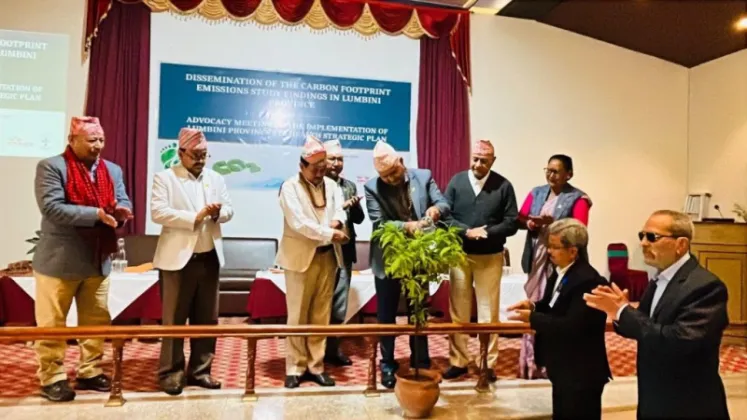
Lumbini Province Chief Minister Chetnarayan Acharya said on Tuesday that the provincial government will prioritise eye health services and increase investment to reduce blindness and vision impairment in the province. He made the commitment at a programme in Lamahi, where the Nepal Netra Jyoti Sangh released a study report examining eye care services and their carbon footprint.
Government commitment to eye care
Acharya’s remarks set out the provincial government’s intention to give greater priority to eye health and put more investment into services. The stated aim is to reduce blindness and vision impairment across Lumbini Province. His commitment was made at a programme that also focused on research into eye care provision and its environmental effects.
The announcement did not include details about the amount of additional investment, a funding timeline or specific programmes. Acharya’s pledge, as reported, was a commitment to prioritise services and increase investment. It places eye health on the provincial government’s agenda, while leaving the practical steps and scale of the proposed investment to be set out separately.
Study examines services and carbon footprint
The Nepal Netra Jyoti Sangh released a report at the Lamahi programme that examines eye care services and their carbon footprint. According to the summary of the study, it looks at carbon emissions from eye care providers and the effects of those emissions. The report therefore considers both the services involved in eye care and the environmental impact associated with providers.
No figures or specific findings from the report were provided in the available information about its release. The announcement also did not identify particular providers, describe which activities produced emissions or state what measures might reduce the footprint. Those details would be needed to assess the scale of the environmental effects and how they relate to the delivery of eye care.
The report’s release alongside Acharya’s commitment brought the health-service and environmental dimensions of eye care into the same discussion. The government’s stated focus is on reducing blindness and vision impairment through greater prioritisation and investment. The study, meanwhile, examines emissions linked to eye care providers and their effects. The information available does not set out a specific connection between the report’s findings and provincial plans.
Next steps remain to be detailed
Acharya’s pledge signals an intention to increase provincial attention to eye health, but no implementation plan was announced in the summary of the programme. Details such as how new investment would be allocated, which services would receive priority and how progress would be measured were not provided. The commitment establishes the broad objective of reducing blindness and vision impairment, but further information will be needed to understand how that objective will be pursued.
Similarly, the study report may offer evidence about the carbon footprint of eye care providers, but its findings and recommendations were not included in the available account. Without those details, it is not possible to state what emissions the report identified or what changes it proposes. The programme in Lamahi brought the government’s stated eye-health priority together with the release of research on the effects of emissions from eye care services.