Authorities in Dhanusha district have launched a drive to remove unauthorised structures built within the road boundary of the Hulaki Highway, as preparations move forward to bring the Kamala bridge into operation from the month of Mangsir. The clearance covers the highway stretch from Kadamchowk in Janakpurdham up to the bridge over the Kamala River, with the planning office of the Hulaki Highway Directorate carrying out the removal of houses, sheds and roadside stalls that fall inside the road's right-of-way. The twin moves, clearing the encroached corridor and readying the bridge for traffic, mark a significant step for a highway widely regarded as the lifeline of the Tarai-Madhes region.
Clearance Drive from Kadamchowk to the Kamala River
The operation targets the section of the Hulaki Highway that begins at Kadamchowk in Janakpurdham, the district headquarters of Dhanusha, and runs up to the Kamala River bridge. According to reports published by Nagarik News, the Hulaki Highway Directorate's planning office has begun removing structures that stand within the boundaries of the road, commonly referred to as the Postal Road.
The structures being cleared along the stretch include:
- Houses built inside the road boundary
- Sheds and similar outbuildings occupying the reserved corridor
- Roadside stalls that have encroached upon the highway's right-of-way
Such encroachment has long been a challenge for highway management in the densely settled Tarai, where commercial activity and settlement patterns often spill directly onto road reserves. Clearing the corridor is being carried out ahead of the bridge's commissioning, ensuring that the section of the highway leading up to the new structure is free of obstructions.
Why the Right-of-Way Matters
The right-of-way is the strip of land legally reserved for a road itself, along with its drains, shoulders and any future widening. When houses, sheds and stalls are built inside this boundary, they narrow the effective carriageway, complicate maintenance work and make it harder for authorities to upgrade the road later. Removing such structures is therefore a standard and necessary step before a road section or bridge is formally brought into use, as vehicles and pedestrians need an unobstructed corridor to move safely.
For the stretch between Kadamchowk and the Kamala River, the removal drive is expected to restore the road boundary to its intended width, allowing the highway to function as designed once the bridge opens.
Kamala Bridge Being Readied for Mangsir Operation
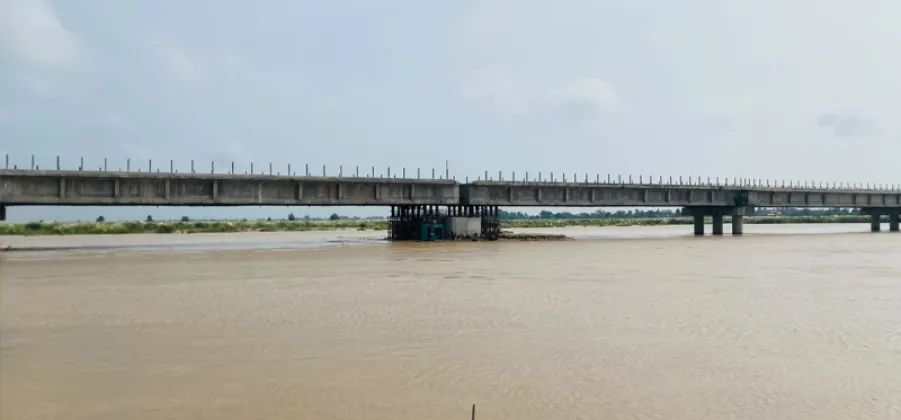
Alongside the clearance work, preparations are under way to operate the Kamala bridge from Mangsir, the eighth month of the Nepali calendar, which falls roughly between mid-November and mid-December. As reported by Ratopati, the bridge over the Kamala River is being prepared for operation even as structures within the boundaries of the Postal Road are being removed.
The Kamala River is one of the major rivers of the eastern Tarai, and the crossing at this point is a key link on the Hulaki Highway in Dhanusha. Bringing the bridge into operation is expected to ease movement along the corridor for residents, traders and travellers who depend on the route for daily transport. The timing of the clearance drive alongside the bridge preparations suggests a coordinated effort to have the entire section, from Kadamchowk in Janakpurdham to the river crossing, ready for smooth traffic flow when the structure opens.
Lifeline of the Tarai-Madhes
The Hulaki Highway holds a special place in the transport network of Nepal's southern plains. Historically associated with postal delivery across the Tarai, the road is often called the Postal Road and is today regarded as the lifeline of the Tarai-Madhes region. It runs through the plains, linking towns, bazaars and settlements that lie off the main arterial routes, and serves as a critical corridor for local trade, agriculture and everyday mobility.
For districts like Dhanusha, the highway's condition and usability have a direct bearing on economic life. Markets in and around Janakpurdham depend on the route for the movement of goods, while residents rely on it for access to services, education and employment. This is why the removal of encroachments and the opening of the Kamala bridge carry importance well beyond the immediate stretch of road being cleared.
What Comes Next
With the clearance drive under way and the bridge's opening scheduled for Mangsir, attention will now turn to how effectively the corridor is kept free of renewed encroachment. Structures removed from the right-of-way between Kadamchowk and the Kamala River will need to remain outside the road boundary if the highway is to deliver the benefits intended from the drive.
For now, the message from the authorities is clear: as the Kamala bridge prepares to open for operation in Mangsir, the Hulaki Highway corridor leading to it is being reclaimed for the road, restoring the full width of a route that millions in the Tarai-Madhes depend upon every day.