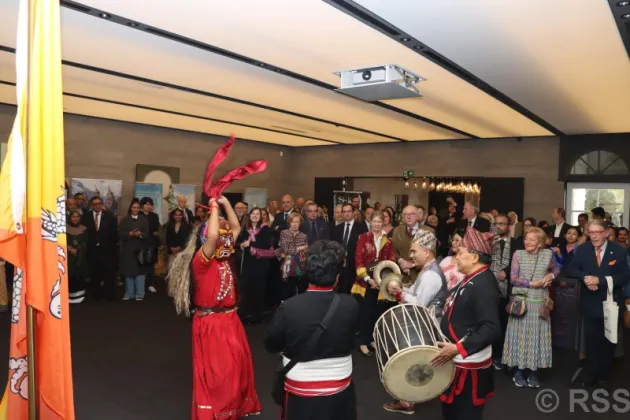
A joint tourism promotion event was held recently in Brussels, the capital of Belgium, as part of continuing efforts to market Nepal's tourism and cultural offerings to a European audience. The programme gave guests a direct experience of Nepali hospitality, with traditional dishes served to everyone in attendance. Food emerged as the centrepiece of the gathering, as guests savoured sel roti and choila, two much-loved Nepali delicacies that offered visitors an authentic flavour of the country's culinary heritage. According to reports published by Nepal Views and Thaha Khabar, the event was organised with the explicit aim of promoting Nepal's tourism and culture internationally.
A Taste of Nepal in the Heart of Europe
The response of the guests in Brussels underlined how powerfully cuisine can connect cultures. Attendees enjoyed a spread of Nepali dishes, with two items in particular drawing appreciation from those present:
- Sel roti is a ring-shaped sweet bread made from rice flour batter, deep-fried until golden and crisp. A festive favourite across Nepal, it is closely associated with major celebrations such as Dashain and Tihar and is often the first dish offered to guests at family gatherings.
- Choila is a fiery and aromatic dish rooted in the Newar community of the Kathmandu Valley. Typically prepared with grilled or roasted meat marinated in a blend of spices, it is traditionally served alongside beaten rice, known as chiura, and is a fixture of communal feasts.
The presence of these dishes at a promotional event in Brussels was more than a culinary gesture. For many of the guests, the meal served as a first and tangible encounter with Nepal, something food can often achieve more quickly than brochures or formal presentations. Nepali festivals, rituals and social life are closely tied to shared meals, and introducing that tradition abroad allows promoters to present the country as a living, breathing culture rather than merely a collection of destinations.
From the kitchen to the campaign
Gastronomy has increasingly become a component of tourism promotion around the world, and Nepal's food traditions, from Newar feasts in the capital to hill-country staples, offer the country a distinctive identity in a crowded travel market. Cultural events featuring authentic cuisine help translate abstract ideas like heritage and hospitality into something guests can see, smell and taste. For a destination like Nepal, whose image abroad has long been dominated by its mountains, such gatherings broaden the picture considerably, presenting food, festivals and everyday life alongside trekking and mountaineering.
Putting Nepal on Europe's Tourism Map
The Brussels programme was described as a joint initiative, reflecting the collaborative approach that characterises many of Nepal's promotional activities in foreign markets. Its central objective was straightforward: to promote Nepal's tourism and cultural offerings to an international audience gathered in one of Europe's most consequential cities.
Brussels itself is a strategic setting for such an event. As the capital of Belgium and the seat of major European Union institutions, the city hosts a large international community of officials, diplomats, business travellers and tourists. Its position as a European crossroads makes it a logical venue for any campaign seeking to raise Nepal's profile among European travellers, who remain an important segment of visitors to Nepal.
For the Nepali side, events of this kind serve several purposes at once. They create awareness of the country among audiences who may know it primarily through images of the Himalaya, they provide a platform for direct engagement with potential travellers, and they reinforce the message that Nepal's appeal extends well beyond its trekking trails to include cuisine, festivals, art and architecture.
Nepal's Offerings and the Road Ahead
Nepal arrives in such promotional settings with a formidable portfolio. The country is home to eight of the world's fourteen peaks that rise above 8,000 metres, including Mount Everest, the highest point on earth. The Kathmandu Valley preserves a remarkable concentration of historic temples, palaces and courtyards, while Lumbini, in the southern plains, draws Buddhist pilgrims from around the world as the birthplace of Gautama Buddha. Beyond these well-known highlights lie trekking routes through mountain villages, wildlife reserves in the Terai and a mosaic of communities whose languages, cuisines and festivals differ from one valley to the next.
Tourism stands among the important pillars of the Nepali economy, sustaining hotels, airlines, trekking agencies, restaurants and countless smaller enterprises that depend on the flow of visitors. In recent years, promotional events staged abroad have leaned increasingly on culture and cuisine to differentiate Nepal from competing destinations, and the Brussels event followed that trend closely.
For the guests who gathered in the Belgian capital, the evening delivered sel roti, choila and, through them, a small but memorable introduction to Nepal. For the country's tourism promoters, the gathering represented another step in a longer campaign to keep Nepal visible in the competitive European travel market, one plate and one conversation at a time.