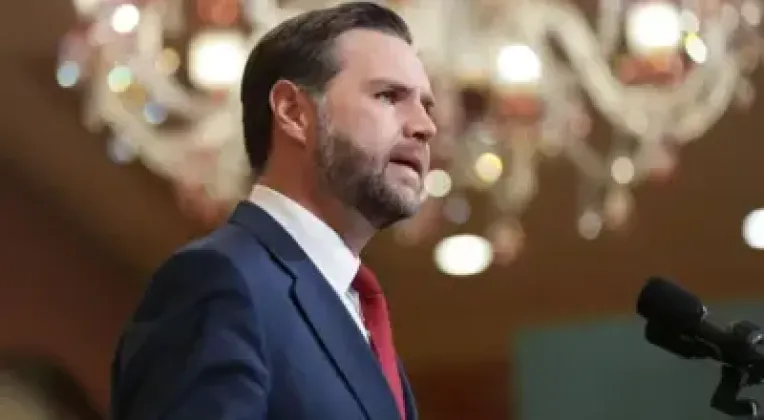
US Vice President JD Vance is reportedly working to forge a new political alliance aimed at supporters of President Donald Trump who have become disaffected, according to a report published from Washington, D.C., following the November 3 midterm elections. The effort is being framed as part of preparations for the 2028 presidential election cycle and comes after major electoral setbacks for Trump-aligned forces. The report, carried by Khabarhub and citing Fox News Digital, attributes the account to multiple sources.
Report describes an effort to build a new alliance
The reported initiative would seek to bring together a political coalition among people who have supported Trump but are now described as disaffected. The account positions Vance’s activity as an attempt to organize that constituency ahead of the next presidential cycle, rather than as a campaign launch or a formal declaration of candidacy. The available report does not specify the alliance’s proposed name, membership, structure or public platform.
That distinction matters: the reported goal is to forge an alliance, but the information provided does not establish that a new organization has been formally created. Nor does it outline how Vance or his associates might approach potential participants. The account is based on multiple sources cited by Fox News Digital, as reported by Khabarhub; no additional details about those sources are included in the available summary.
The report also does not describe any direct public statement from Vance confirming the effort. Its claims should therefore be understood as a report about behind-the-scenes political activity, not as an announced plan with publicly outlined terms. The available information leaves open what role Vance himself would take, who would be involved, and whether the effort would develop into a formal political operation.
Midterm setbacks form the political backdrop
The reported push comes after major electoral setbacks during the November 3 midterm elections. The summary of the report does not identify particular races, candidates or results, and it does not explain how those outcomes affected individual Trump supporters. It does, however, connect the setbacks to the political context for Vance’s reported effort to reach people who may be dissatisfied with the direction or performance of the Trump-aligned political camp.
The account suggests that the post-election period is being treated as a moment to consider how to maintain or rebuild support before 2028. That is a long-term horizon, and the report does not say whether the alliance is intended to influence a specific election immediately, shape policy debates, or serve as a vehicle for a presidential campaign. Those questions remain unanswered in the details provided.
A 2028 horizon, with key details still unclear
The 2028 presidential cycle is the stated target of the reported effort. By linking the alliance to that cycle, the account places Vance’s reported activity within the early stages of preparation for the next presidential contest. It does not, however, say that Vance has declared an intention to run, describe any campaign timetable, or identify a list of prospective partners. A push to build an alliance and a decision to seek the presidency are separate matters, and the report as summarized confirms only the former as an attributed account.
The central question is how the proposed coalition would appeal to disaffected Trump supporters while remaining connected to the wider political movement. The report offers no detail on the concerns that have led those supporters to become disaffected, or on what priorities could persuade them to join a new alliance. It also does not explain whether the effort would seek to bring people back into existing political structures or gather them under a new banner.
For now, the report presents an early and incomplete picture: Vance is said to be working toward a new right-wing alliance, the effort is aimed at disaffected Trump supporters, and the 2028 election cycle is its stated horizon. The specific participants, objectives and next steps have not been set out in the available account. Any assessment of the initiative’s scale or likely effect would depend on further details about whether it becomes a formal organization and how its organizers define its purpose.