
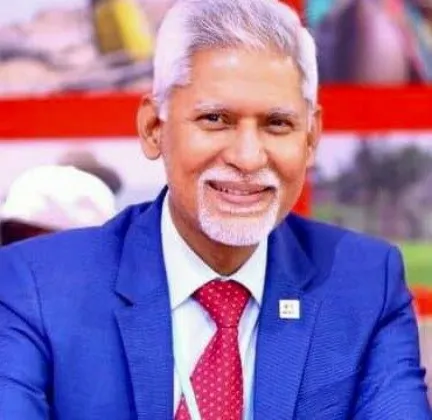
Jagan Chapagain, Secretary General of the International Federation of Red Cross and Red Crescent Societies (IFRC), has been appointed Global Ambassador for the Grand Bargain and was formally welcomed into the role at the initiative’s 2026 Annual Meeting. The appointment brings the head of the world’s largest humanitarian network into an ambassadorial role for a global effort focused on improving how humanitarian action is carried out. The announcement identifies Chapagain’s new position and the meeting at which he was welcomed.
A role focused on humanitarian action
The Grand Bargain is a major global initiative aimed at making humanitarian action more effective, accountable, equitable and locally led. Those priorities frame the work associated with the initiative: improving the impact of humanitarian response, strengthening accountability, advancing fairness and ensuring local leadership has a central place. Chapagain’s appointment as Global Ambassador connects his role as IFRC Secretary General with that wider agenda.
The appointment was formally recognized at the 2026 Grand Bargain Annual Meeting. The available announcement confirms that Chapagain was welcomed into the role there, but does not provide further details about the appointment process, the length of his term or the specific activities he will undertake as ambassador. It also does not identify a physical location for the meeting.
Linking the IFRC and the Grand Bargain
Chapagain leads the IFRC, whose work is associated with humanitarian action around the world. His appointment therefore gives the Grand Bargain an ambassador who holds a senior position within an international humanitarian organization. The announcement establishes that connection without setting out a detailed programme for his new role or describing specific commitments made at the meeting.
The Grand Bargain’s stated aims point to several connected questions for humanitarian work. Effectiveness concerns whether assistance responds to needs; accountability concerns how humanitarian action is answerable to the people it is intended to help; equity calls for fair treatment; and local leadership emphasizes the importance of leadership close to affected communities. These are the principles named in the initiative’s description, rather than details of a new policy announced alongside Chapagain’s appointment.
What the appointment signals
By naming Chapagain its Global Ambassador, the Grand Bargain has added the IFRC Secretary General to its public-facing leadership around the initiative. The title signals a role connected to promoting the Grand Bargain’s aims, although the information provided does not specify how that advocacy will be carried out. No particular campaign, timetable or new initiative was announced in the available account.
The appointment also places the initiative’s four stated priorities in focus: effectiveness, accountability, equity and local leadership. Together, they describe the kind of humanitarian action the Grand Bargain seeks to advance. The announcement, however, does not say that the appointment changes the initiative’s existing goals, nor does it provide details about how progress against those goals will be measured.
Chapagain’s formal welcome at the 2026 Annual Meeting marks the confirmed start of his ambassadorial association with the Grand Bargain. Further information about his responsibilities or planned work was not included in the announcement. For now, the confirmed development is his appointment and the connection it establishes between his IFRC leadership and the Grand Bargain’s effort to make humanitarian action more effective, accountable, equitable and locally led.


