
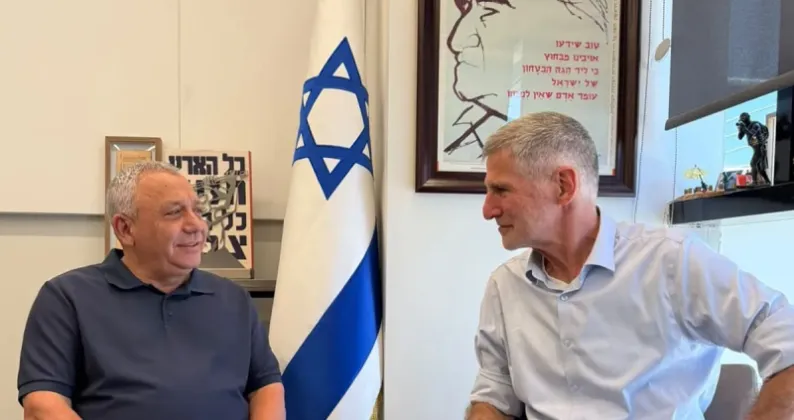
Israeli opposition leader Eisenkot has stepped up his efforts to form a government in Israel, holding a series of meetings with opposition leaders as he works to assemble a governing coalition, according to a report by Thahakhabar. The intensified push comes amid ongoing political activity in Israel over government formation, with the question of who can put together a workable majority remaining at the centre of the country's political conversation.
According to the report, Eisenkot has been meeting leaders from across the opposition as part of a sustained attempt to piece together a coalition capable of governing. The round of meetings signals that the opposition leader is treating coalition-building as an active, hands-on exercise rather than a distant ambition, engaging directly with the parties and figures whose support any prospective government would ultimately require.
Eisenkot courts opposition leaders in coalition push
The core of Eisenkot's effort, as described in the report, is a series of consultations with fellow opposition leaders. Coalition formation in Israel is rarely the work of a single party. Governments in the country are almost always built through negotiation among several political groups, each of which brings its own priorities, demands and supporters to the table. By holding direct meetings with other opposition figures, Eisenkot appears to be laying the groundwork for such an arrangement, seeking common ground among parties that may differ on policy but share an interest in shaping the next government.
Such talks typically cover the basic architecture of a possible coalition: which parties would take part, how a government's priorities would be framed, and how key roles and responsibilities would be shared. While the report does not detail the outcome of the discussions, the fact that they are being held at all underlines the level of political activity currently under way in Israel over the shape of the next government.
What forming a government in Israel involves
Understanding the scale of the task helps explain why Eisenkot's meetings matter. Israel elects its parliament through a proportional system, and no single party has traditionally won an outright majority on its own. A government, therefore, must be assembled from a coalition of parties that together command the confidence of the house. That makes coalition-building the decisive phase of Israeli politics: the leader who can unite enough parties behind a common platform stands the best chance of forming a government.
The process demands compromise. Smaller parties often use coalition negotiations to secure commitments on the issues closest to their voters, while a prospective head of government must balance those demands against the need to keep the emerging coalition coherent. Negotiations can be lengthy, and talks that begin quietly between party leaders can take considerable time to mature into a formal governing agreement. Against that backdrop, Eisenkot's decision to intensify his meetings suggests he is working to move the process forward while the political moment allows.
The hurdles any coalition must clear
In any Israeli coalition negotiation, a few elements typically decide whether the effort succeeds:
- Parliamentary arithmetic - the bloc must be able to gather majority support in the Knesset, Israel's parliament.
- Agreement among parties - leaders with different agendas must settle on a shared governing platform.
- Distribution of roles - senior positions and ministerial responsibilities must be allocated in a way that keeps every partner on board.
- Durability - a coalition must not only be formed but also hold together once governing begins.
Ongoing political activity keeps focus on government formation
The report notes that Eisenkot's push comes amid ongoing political activity in Israel over government formation. That activity has kept the question of the next government at the top of the national agenda, with party leaders, lawmakers and observers all focused on whether the various strands of negotiation can be converted into a viable coalition.
For the opposition, the stakes are clear. A successful coalition effort would translate weeks of positioning into a concrete governing project, while a failure to unite would leave the task of forming a government to others. Eisenkot's meetings are, in effect, an attempt to narrow the gap between those two outcomes, building the personal and political trust among opposition leaders on which any coalition ultimately depends.
The road ahead
No final outcome of the talks has been announced, and the report does not indicate when a resolution might emerge. What is clear is that Eisenkot has chosen to invest significant effort in the attempt, holding meetings and maintaining momentum at a time when political activity over government formation continues across Israel.
Attention will now turn to whether those discussions can produce a broader agreement within the opposition's ranks. Coalition-building is a test of both arithmetic and unity: a prospective government must gather sufficient support in parliament and then keep it together after taking office. Eisenkot's intensified engagement with opposition leaders is aimed squarely at that dual challenge, and the coming stages of the process will show how much common ground he has been able to build.
For now, as the report by Thahakhabar indicates, the effort continues: an opposition leader pressing meetings and conversations into service, and a country watching to see whether those efforts will add up to a government.


