
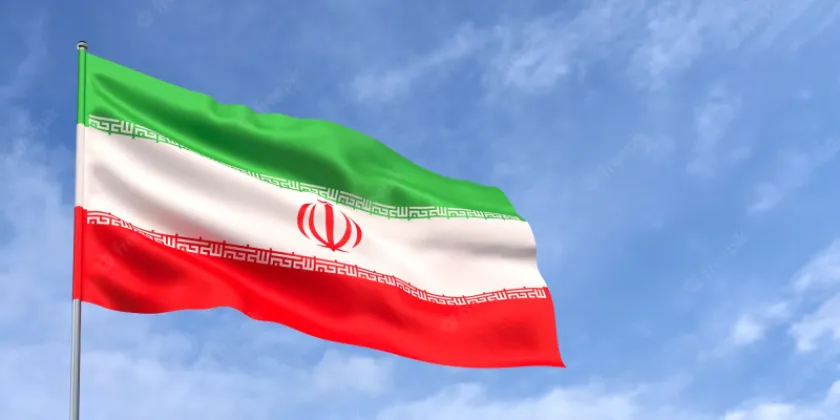
Iran warned on Sunday from Tehran that any new war with the United States could last longer than the previous conflict, rejecting the idea that US President Donald Trump could determine how long a confrontation would continue or on what terms. Iran said the party making threats cannot decide the scope, timing or outcome of its defensive response.
Iran rejects US control over a conflict’s terms
The warning presents Tehran’s position that the course of any future conflict would not be set unilaterally by Washington. Iran said Trump cannot determine the duration or terms of a war, and argued that threats do not give the side issuing them the authority to define the limits of Iran’s response.
That distinction is central to the message: Tehran is not simply predicting that another conflict could be prolonged. It is also challenging the idea that the United States could control when such a conflict begins, how it unfolds or when it ends. Iran’s statement framed those questions as matters that would not be decided by the party issuing threats.
The warning referred to Iran’s response as defensive. In that framing, the scope and timing of a response would be determined by Iran rather than fixed in advance by US demands or declarations. Tehran’s message therefore ties its prediction about a potentially longer war to its rejection of outside control over the conflict’s terms.
A warning about the possible length of a new war
Iran’s statement compared a possible future war with the previous one, warning that a new conflict could last longer. The warning did not present the prospect of a short or easily contained confrontation. Instead, it emphasised that any new war could extend beyond the duration of the earlier conflict.
The statement did not provide a specific timeline for how long a future war might continue. Its central point was that Trump could not decide that duration. Iran’s warning also did not set out a timetable for a response; it argued more broadly that the scope and timing of Iran’s defensive action could not be dictated by the party making threats.
By combining the possibility of a longer conflict with a rejection of US control over its terms, Tehran’s warning signals that it does not accept a fixed endpoint set by Washington. The message leaves the duration of any future war uncertain, while asserting that Iran would determine the character and timing of its own response.
Tehran’s message on threats and response
The warning places responsibility for the consequences of a confrontation beyond the control of the side making threats, according to Iran’s stated position. Tehran argued that threats cannot determine the scale of its response or establish when that response would begin and end. It also rejected the idea that the outcome could be prescribed in advance.
The remarks are a warning about the risks Iran says could follow from a new war with the United States. They do not specify what action Iran would take or set out particular conditions for a response. Instead, the statement focuses on who would have authority over the conflict’s duration and terms, insisting that those decisions would not belong to Trump.
Iran’s Sunday warning thus carried two connected points: a new war could last longer than the previous one, and the United States could not dictate the scope, timing or outcome of Iran’s defensive response. Tehran’s position, as stated, is that threats alone cannot determine how a conflict would unfold or when it would end.


