
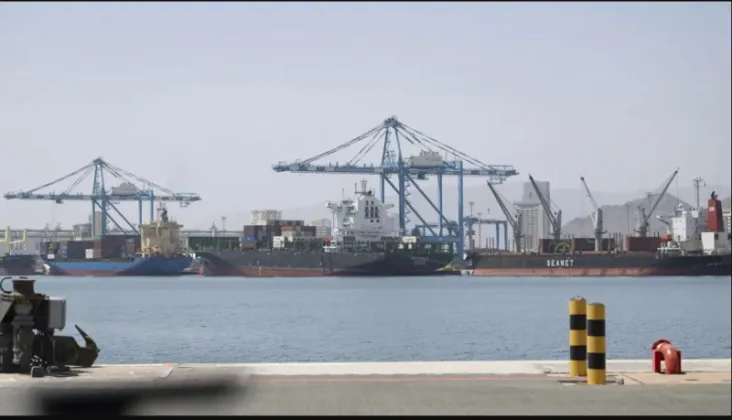
Iran has said the Strait of Hormuz could be reopened within two days if the United States meets a set of demands it has laid down, according to reports carried by Nepali news outlets. The reports state that Iran has set out specific conditions for the strategic waterway to open again, but they do not detail what those demands are, when they were conveyed, or how negotiations between Tehran and Washington currently stand.
Key points at a glance
- Iran says the Strait of Hormuz could be reopened within two days, according to reporting carried by Nepali outlets.
- The reopening is conditional: the United States must first fulfil demands that Iran says it has specified.
- The demands themselves are not detailed in the available reports.
- No information about negotiations between Iran and the United States was provided.
- The phrasing of the headline implies the waterway is currently closed, though the reports do not say when or why any closure took effect.
A conditional promise, reported through Nepali media
The story was carried by the Nepali news platform Nepal Views under the headline "Iran says Hormuz will open within two days if US meets demands." Its central claim is direct: the waterway will be opened within a two-day window once the United States satisfies Iran's conditions.
What gives the statement its weight is the conditional structure. Iran is described not simply as promising a reopening but as setting terms, with specific demands that must first be met. The reporting states plainly that Iran "has set out specific conditions for the waterway to be opened," while offering no elaboration on their content.
Equally notable is what the reports do not contain. There is no account of when the statement was made, by whom within Iran's leadership or state institutions, or through which channel it was communicated. Nor is there any indication of whether the United States has received the demands, responded to them, or entered talks with Tehran over the strait's status.
Why the Strait of Hormuz matters
The Strait of Hormuz is a narrow passage between Iran to the north and Oman to the south, linking the Persian Gulf with the Gulf of Oman and, beyond it, the Arabian Sea and global shipping lanes. It is the principal sea route for oil exported by producers around the Gulf, and a large share of the petroleum moved by sea worldwide passes through it in tankers bound for Asia, Europe and the Americas.
Because so much of the world's energy supply depends on that passage, the waterway is watched closely by governments, shipping companies, insurers and energy markets. Any suggestion that access is restricted, or that reopening depends on political conditions, is treated as consequential for tanker routes, insurance costs and market sentiment, even when the underlying terms are not spelled out.
Iran's position on the strait's northern coast has long placed it at the centre of disputes over access to the waterway, and questions of closure and reopening have recurred in tensions between Tehran and Washington over the years. Against that backdrop, a public pledge to reopen the strait within days, tied directly to American action, is a notable formulation.
What the reports leave open
The available reporting answers few of the questions readers are likely to ask:
- What exactly Iran's demands are, and whether they are political, security-related or otherwise.
- Whether negotiations between Iran and the United States are under way, and in what format.
- When and where the statement was issued, and by whom.
- The current status of shipping through the strait, and when any closure or restriction began.
- Whether the United States has reacted to the reported conditions.
None of these points is addressed in the material summarised by Nepali outlets, which state only that Iran has set conditions and named a two-day timeframe, and that no further details on the demands or on any negotiations were provided. Readers should therefore treat the two-day promise as a reported claim by Iran whose practical meaning depends on conditions that have not been made public in these reports.
The two-day framing is itself significant. It presents reopening not as a drawn-out process but as a near-immediate consequence of American compliance, as though normal passage could resume within days of the demands being met. The reports do not address the shipping, insurance and logistical steps that restoring regular traffic through a major waterway would normally involve, nor do they clarify when the two-day clock would begin.
For Nepali readers, the story has a practical backdrop. Nepal imports the overwhelming majority of its petroleum products and is exposed to international fuel prices, which are sensitive to developments in the Gulf. News touching the Strait of Hormuz is therefore followed well beyond the countries directly involved in any dispute over it.
For now, the reporting amounts to a short but pointed message from Iran: the strait reopens within two days if Washington meets its demands. Until the substance of those demands, and any American response, becomes clear, the significance of the offer rests on its timing and its conditions rather than on any known detail of their content.


