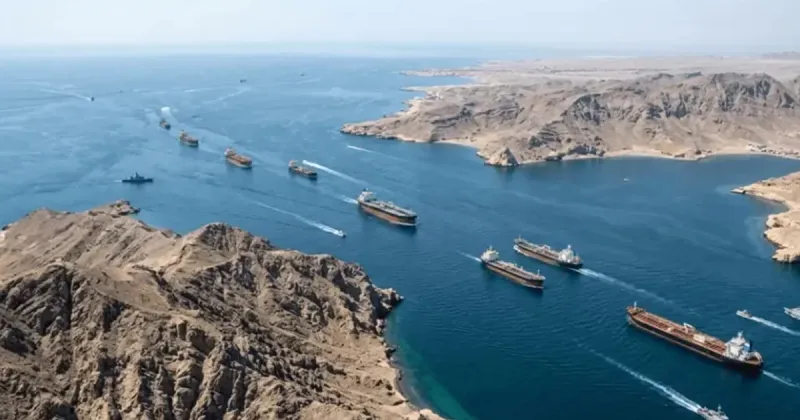
Iran has exempted India, China, Iraq and Qatar from restrictions on the Strait of Hormuz, in a decision that eases passage through one of the world's most sensitive energy waterways for the four countries, Nepali news outlets reported on November 5, 2026. The reports, published by Thaha Khabar and Baahrakhari, said the exemptions would ease the movement of vessels belonging to or serving these countries through the strategic strait. While the reports did not spell out the terms of the arrangement, the decision stands out because it carves out two of Asia's largest energy importers and two key Gulf exporters whose trade flows depend heavily on the narrow passage.
What the reports said
According to Thaha Khabar, Iran has granted exemptions from restrictions in place on the Strait of Hormuz for India, China, Iraq and Qatar. The Nepali news outlet Baahrakhari also carried the report on the same day, describing the move as an easing of passage through the waterway for the four countries.
The key points from the reports are:
- Iran has granted exemptions from restrictions on the Strait of Hormuz.
- Four countries are covered by the exemptions: India, China, Iraq and Qatar.
- The exemptions ease passage through the strategic waterway for these countries.
- The reports were published on November 5, 2026.
- Further details of the arrangement were not specified.
Neither report elaborated on when the restrictions had been introduced, what form they took, how long the exemptions would last, or whether any conditions were attached. The absence of those specifics means the practical scope of the decision remains unclear, and any fuller picture will depend on follow-up statements from the countries involved or from Iranian authorities.
Why the Strait of Hormuz matters
The Strait of Hormuz lies between Iran to the north and the Musandam Peninsula of Oman to the south, connecting the Persian Gulf with the Gulf of Oman and, beyond it, the Arabian Sea. At its narrowest point the shipping channel is only a few tens of kilometres wide, and inbound and outbound traffic is tightly channelled, making it one of the most closely watched maritime passages in the world.
The strait is the principal outlet for crude oil and liquefied natural gas produced along the Gulf. Tankers loading in Iraq's southern terminals and in Qatar, as well as shipments from other littoral states, pass through the waterway on their way to markets in Asia and beyond. For importing economies, the strait is equally significant: a large share of the crude oil consumed by Asian countries is shipped through it, which is why any restriction or disruption in the area reverberates quickly through global energy and shipping markets.
Given that profile, even limited measures affecting access to the strait attract close attention from governments, shipowners and insurers. Exemptions for specific countries, as reported in this case, are therefore likely to be read as a signal about which trading partners can continue to move their cargoes with fewer obstacles.
What the exemptions could mean for the four countries
The choice of the four exempted countries reflects their outsized stakes in the waterway. India and China are among the world's largest importers of crude oil, and both draw a substantial portion of their supplies from Gulf producers whose exports must transit the Strait of Hormuz. For these two economies, reliable passage through the strait is closely tied to energy security and to the cost of the oil and gas that feed their industries.
Iraq and Qatar, for their part, sit on the exporting side of the equation. Iraq's crude shipments from its southern ports and Qatar's exports of liquefied natural gas both depend on the strait as the sole seaward route out of the Gulf. An exemption easing passage for these two countries would, in principle, support the continuity of their export flows at a time when access through the waterway is subject to restrictions.
Because the reports did not detail the mechanism of the exemptions, it is not yet known whether they apply to vessels under national flags, to cargo originating in or destined for these countries, or to some other category of traffic. That distinction matters for shipping companies, which typically structure their routes, insurance and cargo documentation around precisely such rules.
Details still awaited
For now, what is known comes from the brief reports in the Nepali press: Iran has decided to exempt India, China, Iraq and Qatar from restrictions on the Strait of Hormuz, and that decision eases passage for the four countries. The reports did not indicate when the exemptions take effect, whether they are open-ended or time-bound, or whether further countries could be added.
The Strait of Hormuz's importance to global oil and gas shipments means that any clarification is likely to be followed closely in New Delhi, Beijing, Baghdad and Doha, as well as by shipping and energy market participants around the world. Until more information emerges, the reported exemptions stand as a notable adjustment in access to one of the world's most consequential waterways, and further official detail will be needed to establish their full scope and effect.