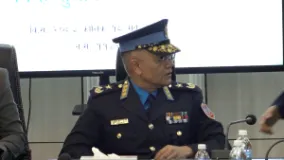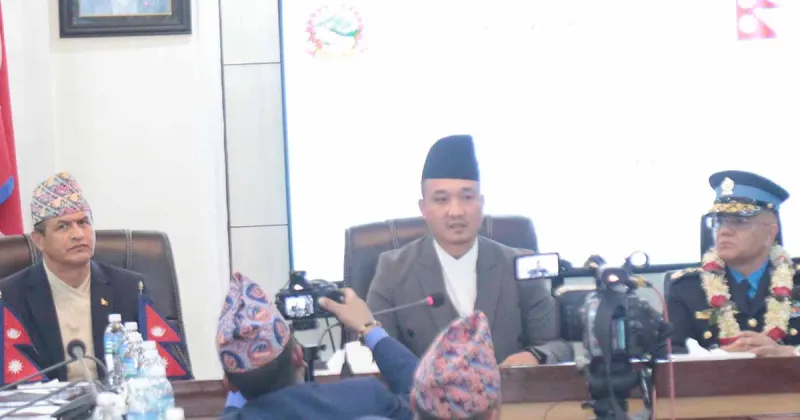
Nepal's new police leadership has received its first clear policy direction from the government, and it concerns the everyday relationship between the uniform and the street. Home Minister Gurung on Wednesday directed newly appointed Inspector General of Police (IGP) Kesi to work to reduce the gap between the police and ordinary citizens, making it plain that the long-standing distance between law enforcement and the public must now come to an end. The directive, reported by multiple Nepali news outlets including Thaha Khabar and Nepal Samaya, signals that repairing police-public trust will be treated as a defining priority of the new command of the Nepal Police.
A Direct Message to the New Police Chief
The instruction was delivered on Wednesday, with the Home Minister stating that the distance between the police and the public must now end. According to the reports, the minister emphasized that the gap between citizens and the police should no longer remain, a phrasing that frames the issue not as a routine administrative matter but as an obligation placed squarely on the incoming chief of the force.
Kesi, who has just taken over as Inspector General of Police, was told that narrowing this divide should be a central part of his tenure. The message from the ministry is unambiguous: the effectiveness of the Nepal Police is to be judged not only by crime statistics and law-and-order management, but also by how close the institution stands to the people it serves.
The direction carries added weight because of where it comes from. The Home Ministry exercises overall authority over the Nepal Police, and the Home Minister is the political head responsible for the country's internal security. A directive issued at this level, and at the very start of a new IGP's appointment, functions as an early marker of the government's expectations for the force under its new leadership.
What the Directive Means for the Nepal Police
The Inspector General of Police is the highest-ranking officer of the Nepal Police, the institution responsible for maintaining law and order, preventing and investigating crime, and delivering everyday policing across the country. Whoever holds the post shapes the culture, priorities and public face of tens of thousands of personnel, from metropolitan traffic intersections to district headquarters and rural outposts.
A transition at the top of the force is therefore widely watched, and early instructions from the political leadership often indicate the themes that will define the new tenure. In this case, the theme is one of proximity: the minister's words point to a policing style that is visible, approachable and responsive to citizens, rather than one that keeps the public at arm's length.
The reported emphasis can be read as placing several related expectations before the new IGP:
- Building trust between police personnel and the communities they serve, so that citizens see the force as an ally rather than an authority to be avoided.
- Improving accessibility, so that ordinary people find it easier to approach the police to report problems, seek help and share information.
- Changing institutional behavior, so that the distance the minister described is addressed through the everyday conduct of the force and not merely through statements of intent.
Why the Police-Citizen Gap Matters
The concern the Home Minister raised is a familiar one in discussions of policing. A police force can only work as well as the cooperation it receives from the public, and that cooperation rests on confidence. When citizens trust the police, they are more willing to report incidents, provide information, cooperate with investigations and take part in community-level efforts to prevent crime. When that trust erodes, the flow of information dries up, minor disputes escalate without intervention, and the burden on the criminal justice system grows.
Conversely, a visible distance between the police and the public affects how safe people feel in their daily lives. Communities that feel distant from the police often experience that gap in practical ways, from hesitation at the doorstep of a police office to a lack of confidence that complaints will be heard and acted upon. Addressing this distance is why successive debates on policing reform in Nepal have returned repeatedly to the idea of citizen-friendly, community-oriented service delivery.
By instructing the new IGP to close this gap, the Home Minister has placed that reform conversation at the center of the force's agenda. The directive suggests that the ministry views police-public relations not as a secondary concern but as a measure of the institution's overall health.
Expectations Going Forward
For Kesi, the instruction represents both a mandate and a challenge. Reducing the distance between the police and citizens is a long-term undertaking that touches recruitment and training, the conduct of personnel on the ground, the way complaints are handled, and the image the force projects in every interaction with the public. The new IGP now carries the responsibility of translating the minister's words into visible change across the institution.
For its part, the government has made its position clear. As reported by Thaha Khabar and Nepal Samaya, Home Minister Gurung's message to the newly appointed police chief was that the gap between the police and the people must end, and that it should no longer remain. How the new leadership of the Nepal Police acts on that instruction will now be watched closely by the public whose trust it is meant to win.