
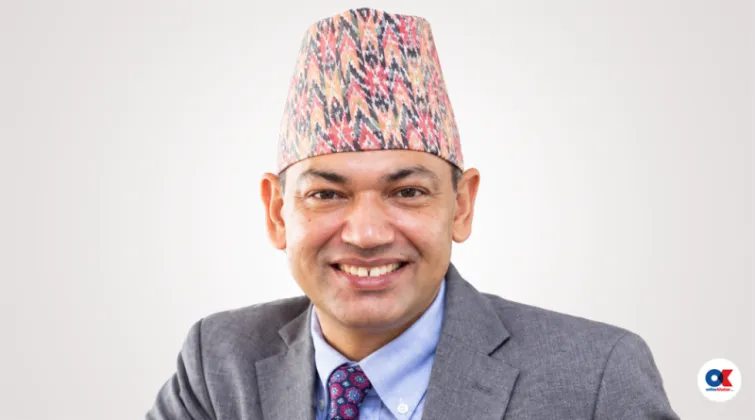
Kathmandu: The fate of Jigyan Kumar Thapa, the government's proposed ambassador to Japan, will come up before the Parliamentary Hearing Committee at 3 pm on Monday, when the panel meets at Singha Durbar to take a decision on his nomination. The committee has scheduled the parliamentary hearing on Thapa's nomination as part of the same meeting. Its decision, however, remains pending: the committee had earlier sought additional information about the nominee from the Ministry of Foreign Affairs, and the ministry has yet to provide the requested details. Until those details arrive, the nominee's confirmation hangs in the balance, and all eyes will be on whether Monday's meeting can deliver a verdict.
A Nominee Waiting on the Foreign Ministry
The story at the centre of Monday's meeting is a straightforward one: the committee asked for more information, and the answer has not come. According to reporting by OnlineKhabar, the Parliamentary Hearing Committee had earlier written to the Ministry of Foreign Affairs seeking additional information about Thapa, but the ministry has not furnished the details so far. That missing paperwork is the reason the committee's decision on his nomination has been left pending, and, as the report noted, the nominee's fate now effectively hinges on the Foreign Ministry.
Ratopati likewise reported that the parliamentary committee is meeting to decide on the proposed ambassador to Japan, with the hearing on his nomination placed on the meeting's agenda.
What remains unresolved
- The Parliamentary Hearing Committee has called its meeting for 3 pm on Monday at Singha Durbar.
- The parliamentary hearing on Jigyan Kumar Thapa's nomination as Nepal's ambassador to Japan is part of that meeting.
- The committee earlier sought additional information about the nominee from the Ministry of Foreign Affairs.
- The ministry has not yet provided the details, leaving the committee's decision pending.
The practical question before Monday is therefore twofold: whether the ministry supplies the information in time, and whether the committee can then proceed to hear and decide on the nominee as scheduled.
How Nepal's Parliamentary Hearing Works
Ambassadorial appointments in Nepal do not take effect on the government's word alone. Under the country's constitutional framework, nominees for key positions, including Nepal's envoys abroad, must first clear a parliamentary hearing before assuming office. That responsibility rests with the Parliamentary Hearing Committee, a joint panel drawn from the federal legislature, which vets nominees before their appointments are confirmed.
In broad terms, the process unfolds in stages. The government nominates a candidate for an ambassadorial post. The committee then takes up the nomination and hears the nominee, giving lawmakers an opportunity to examine the candidate's suitability for the posting. Once the hearing is complete, the committee decides whether to endorse the nomination. An endorsement clears the way for the appointment to proceed, while a failure to endorse leaves the candidacy stalled at the hearing stage.
For Thapa, Monday's sitting is the point at which his nomination either advances or lingers. The committee has placed the hearing on the agenda, signalling that it intends to take up his case. At the same time, its outstanding request to the Foreign Ministry remains unanswered, and that gap sits at the heart of the uncertainty surrounding the nomination.
Why the Tokyo Posting Carries Weight
The ambassadorship in Tokyo is regarded as one of Nepal's more significant diplomatic assignments. Japan is a longstanding partner in Nepal's development, and it hosts a large and steadily growing Nepali community of workers and students. The envoy to Japan therefore represents not only the formal bilateral relationship but also the day-to-day interests of a considerable Nepali diaspora.
That context adds weight to the committee's deliberations. A smooth endorsement on Monday would set the government on course to fill the post with its chosen nominee. A delay, on the other hand, would extend the uncertainty around Nepal's top diplomatic representation in Tokyo, a prospect that follows directly from the ministry's failure to respond to the committee's request so far.
What Happens Next
Monday's meeting, set for 3 pm at Singha Durbar, will reveal whether the outstanding information has reached the committee and whether the hearing on Thapa can be completed as planned. The possible outcomes are clear from the agenda itself: the committee could proceed with the hearing and take a decision on the nomination, or it could find itself unable to move forward if the requested details are still missing.
For now, the positions of the two sides of the process are easy to summarise. The committee has done its part by fixing the date, the time and the venue, and by placing the hearing on the agenda. The Foreign Ministry, by contrast, has not yet delivered what was asked of it. Which of these facts proves decisive will become evident when the committee convenes. Further clarity is expected once Monday's meeting concludes and the panel states where the nomination of Nepal's proposed ambassador to Japan stands.


