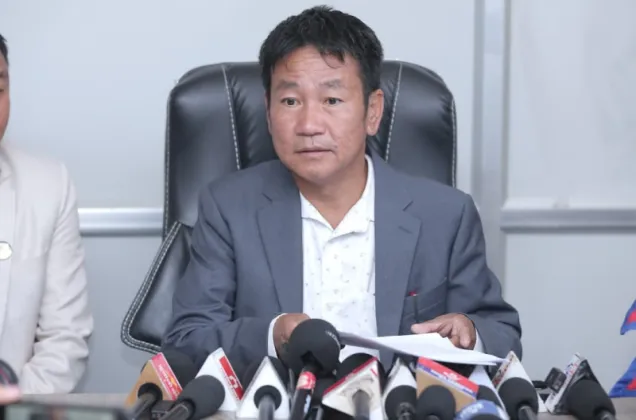
Shram Sanskriti Party chairman Harka Sampang has publicly questioned the government’s decision to remove Dan Bahadur Karki as Inspector General of Police (IGP) and appoint a new police chief, asking whether the move raised or lowered morale within the Nepal Police. In a statement posted on social media, Sampang also questioned whether intermediaries had played a role in the decision.
Sampang raises questions about police morale
Sampang’s comments focused on the possible effect of the leadership change on police morale. He asked whether Karki’s dismissal strengthened morale among police personnel or had the opposite effect. The question places the consequences for the police force at the centre of his response, rather than limiting it to the government’s decision to appoint a new IGP.
The statement did not provide a detailed account of how police personnel had reacted to the change. Instead, Sampang posed the issue as a question for the government and the public: whether removing the serving chief would encourage or discourage the force. His remarks therefore raise a concern about the institutional impact of a change at the top of the police hierarchy, without establishing what effect the decision has had.
Questions over possible intermediaries
Sampang also raised concerns about whether intermediaries had a role in the decision to remove Karki and appoint a successor. He did not, in the statement described in reports, identify any individual or provide details of a specific intermediary. His comment was framed as a question about the process behind the government’s move.
That concern adds a second issue to his response: not only the effect of the change on police morale, but also whether the decision was shaped through channels beyond the formal government process. The available account of his statement does not establish that intermediaries were involved. It records Sampang’s question about their possible role.
The government’s decision, as described in reports, involved removing Dan Bahadur Karki from the post of IGP and appointing a new chief. The statement by Sampang questioned that decision and invited scrutiny of its implications. The reports do not provide further details in the summary about the circumstances of Karki’s removal, the identity of the newly appointed IGP, or the government’s response to Sampang’s remarks.
Sampang’s intervention brings attention to two questions surrounding the change in police leadership: how it may affect the morale of Nepal Police personnel and whether intermediaries influenced the decision. Neither question is answered by the statement itself. His comments remain a public challenge to the government’s move and a call for clarity about its impact and decision-making process.