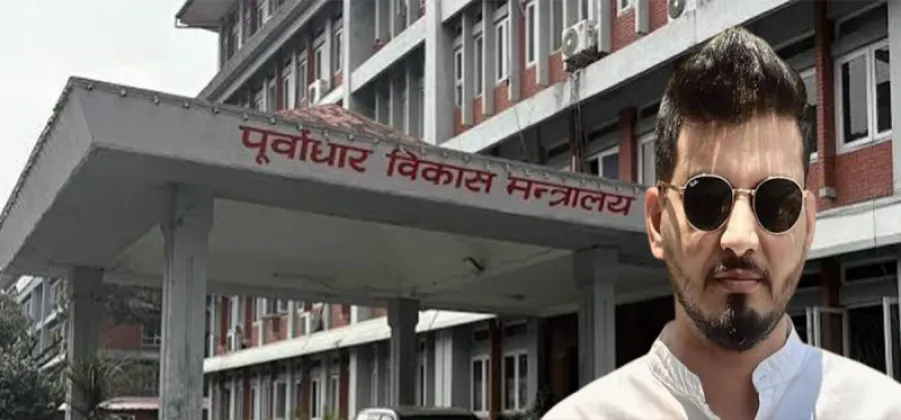
The government has invited bids for 92 drinking water projects within the first three months of the current fiscal year 2083/84, setting the year's water supply agenda in motion with a procurement drive expected to benefit around 1.3 million citizens. The tenders were issued through the Department of Water Supply and Sewerage Management under the Ministry of Physical Infrastructure Development, and the packages cover both small and large projects located in various districts. Minister for Physical Infrastructure Development Sunil Lamsal said the contracts were called over the last three months, confirming that the bidding process for the schemes is now underway.
Tenders Called Through the Department of Water Supply and Sewerage Management
The tender process was formally routed through the Department of Water Supply and Sewerage Management, the agency that implements water supply and sewerage schemes under the Ministry of Physical Infrastructure Development. According to a report by Nagarik News, contracts for the 92 drinking water projects were announced within the first three months of the fiscal year, making this one of the early procurement milestones of 2083/84. Pradesh Khabar also carried the announcement, highlighting the department's role in issuing the tenders for projects spread across various districts.
Minister Lamsal said the contracts were called in the last three months, meaning the tender invitations went out at the very start of the fiscal cycle rather than after the year was already well underway. The announcement gives contractors, suppliers and local communities an early picture of the year's drinking water pipeline, as the 92 projects now move from planning into the competitive bidding stage.
Key details at a glance
- Projects opened for bids: 92 drinking water schemes
- Timeframe: First three months of fiscal year 2083/84
- Implementing agency: Department of Water Supply and Sewerage Management
- Oversight: Ministry of Physical Infrastructure Development
- Expected beneficiaries: Around 1.3 million citizens
- Project scale: Both small and large projects
- Coverage: Projects located in various districts
A Mix of Small and Large Projects Across Districts
The 92 schemes are not limited to a single category of works. The tender round includes both small and large projects, a mix that allows the department to address needs at different scales at the same time. Smaller schemes are generally aimed at compact, community-level water systems, while larger projects involve more extensive infrastructure intended to serve bigger populations.
Because the projects are located in various districts, the expected benefits are spread geographically rather than concentrated in one area. As RatoPati reported, the tenders issued by the department cover projects of differing sizes, giving bidders a range of contracts to compete for in the period ahead.
For the department, the round consolidates a substantial portion of the year's drinking water procurement into a single early push. The agency's portfolio covers water supply and sewerage management, and the newly invited bids fall squarely within that mandate.
Minister Lamsal Points to 1.3 Million Expected Beneficiaries
The figure that stands out in the announcement is the number of people the projects are expected to reach. Minister Sunil Lamsal said around 1.3 million citizens are expected to benefit from the 92 schemes once they are completed.
That estimate gives the tender round a scale that goes well beyond routine maintenance work. For the households included in the beneficiary count, the projects are intended to translate into more reliable access to drinking water, a service that affects daily life directly and is closely followed by communities across the districts where the schemes are located.
Drinking water investment tends to draw public attention because its results are visible at the household level, and the minister's decision to tie the 92 projects to a specific beneficiary estimate has created a clear benchmark against which the schemes' eventual delivery can be judged.
What Comes Next in the Bidding Process
With the invitations issued, the next stages follow the standard course of public procurement in the sector: interested bidders prepare and submit their proposals, the department evaluates the bids received, and contracts are awarded to successful bidders before construction can begin. The department, working under the ministry's oversight, is responsible for managing those steps.
Calling the tenders within the first three months of the fiscal year gives the 92 projects a defined starting point and preserves the maximum amount of time for construction within the annual cycle. Procurement timing often shapes how much of a project can be completed within a single fiscal year, which is why the early call for bids carries particular weight for the schemes involved.
For the districts whose projects are included in the round, the announcement marks the first concrete step of fiscal year 2083/84 toward new or improved drinking water infrastructure. Whether the full 1.3 million people counted among the expected beneficiaries are actually reached will depend on how smoothly the bidding, contracting and construction phases proceed in the months ahead.