Fears that a renewed war with Iran could erupt are deepening across the Middle East in the aftermath of the United States' midterm elections, a vote that much of the region watched with an anxiety that had little to do with American domestic politics. Before the election, US President Donald Trump said publicly that he would not attack Iran. What he did not say, and what he has still not clarified, is what might happen once the vote was over. That silence has left governments, families and businesses across the region searching for signals of what may come next, and it has sharpened worries that the Middle East could be pushed back into a conflict that many had hoped was behind them.
An ambiguous pledge from Washington
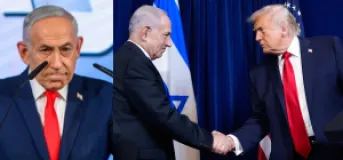
The clearest indication of Washington's current posture came from Trump himself, who said before the midterm elections that he would not attack Iran. Taken at face value, the statement offered reassurance. But it came with what amounts to an unstated expiration date. By framing his pledge around the period before the election, the president left open every possibility for the period that follows it, and he offered no clarification about his intentions afterwards.
For residents of the Middle East, such distinctions matter enormously. The region has learned to read American statements closely, and the difference between "not now" and "not at all" is one that populations living near potential front lines cannot afford to ignore. The concern now taking hold is that the election, which absorbed Washington's attention and political energy for months, may have functioned as a temporary brake on decision-making, and that the period after the vote could open space for a shift in policy that no one in the region can currently predict.
The ambiguity is unsettling precisely because it is open-ended. Without a clear statement of what comes after the midterms, every interpretation remains possible, and in the absence of firm answers, the most alarming ones tend to travel fastest.
Warnings from Tehran deepen the uncertainty
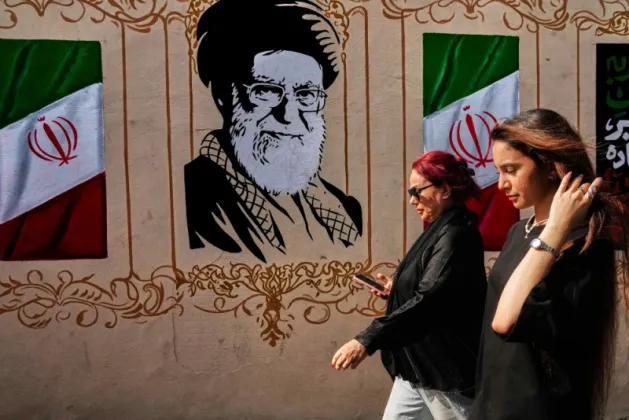
The uncertainty emanating from Washington has been matched by war-related warnings from Tehran, and together the two strands of rhetoric have produced a climate of genuine unease. Iranian warnings of this kind carry particular weight in a region that fears a renewal of fighting, because they suggest that the possibility of conflict is not being treated lightly on either side of the divide.
It is the combination that unsettles people most. A pledge of restraint from Washington that appears to expire with an election, paired with hostile warnings from Tehran, creates a situation in which the intentions of neither capital can be read with confidence. In such conditions, even minor statements are scrutinized for hidden meaning. Analysts, journalists and ordinary residents across the Middle East find themselves parsing every remark for signals of what may come next, largely because their governments have not been able to give them a straight answer.
Gulf states brace for disruption
Nowhere is the apprehension more concrete than in the Arab Gulf countries, where officials and residents are weighing what a return to war would mean for everyday life. The fears, as reported, are specific and practical:
- Schools: families worry that classes could be suspended and education disrupted if hostilities resume.
- Flights: air travel, on which so much regional movement depends, could face serious disruption.
- Daily life: beyond the headlines, there are fears that daily routines could be thrown into disarray altogether.
These are not distant, hypothetical concerns. In Gulf countries, schooling, travel and tightly organized daily schedules form the backbone of ordinary life, and each of them stands exposed to the shocks that a renewed conflict would deliver. A war does not need to begin for its shadow to fall across ordinary decisions. The anticipation alone is already shaping how people in the region think about travel plans, their children's education and the weeks and months ahead.
Reading the signals
For now, the Middle East is left to read the tea leaves. The question that matters most to the region was never on the American ballot: whether the United States will resume military action against Iran once the election is behind it. Trump's pre-election pledge said no, but only up to a point, and the absence of any follow-up clarification has turned the post-election period into a moment of maximum uncertainty.
Until Washington defines its intentions, or Tehran steps back from its warnings, the region's governments and its people will keep watching every statement for meaning, while quietly preparing for the possibility that schools close, flights are grounded and daily life is upended once again. What almost no one in the Middle East wants is a return to war. What almost no one has, at present, is any assurance they will get their wish.