
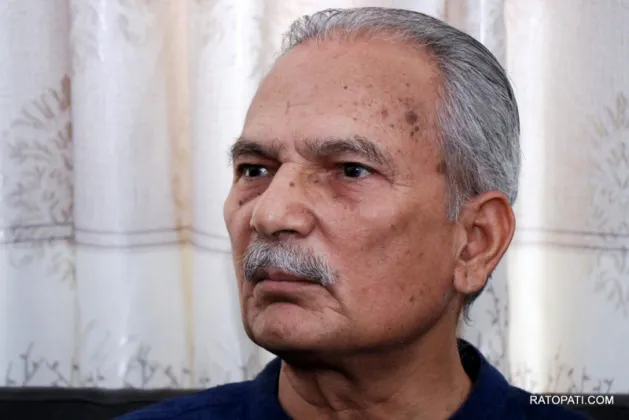
Former Prime Minister Dr Baburam Bhattarai has warned that Nepal is showing signs of heading toward a major crisis, citing growing geopolitical manoeuvring, escalating internal conflict within political parties and deepening disarray in key state bodies. The caution came in a Facebook post published on Sunday, in which the former head of government described the current combination of pressures, both inside the country and around it, as a set of warning signals that the nation is drifting toward serious turbulence. His remarks were carried by Nepali news outlets including RatoPati, Global Aawaj and Ajako Artha.
Three Warning Signs Named
In the Sunday post, Bhattarai identified three broad areas in which he said the country is displaying the signs of a gathering crisis:
- Growing geopolitical manoeuvring: the former prime minister pointed to rising manoeuvring in the geopolitical arena as one of the clearest signals that the situation confronting Nepal is shifting.
- Internal conflict within political parties: he highlighted intensifying disputes inside the parties themselves, rather than merely between them.
- Disarray in key state bodies: he flagged disorder within important state institutions as a further indication of strain on the country's political system.
Geopolitical Pressure at the Fore
The first factor Bhattarai singled out was the growth of geopolitical manoeuvring, a reference to the shifting pressures and positioning to which Nepal is exposed from beyond its borders. By placing this at the centre of his warning, the former prime minister framed the emerging danger not simply as a domestic political problem but as one bound up with developments in the wider region. In his assessment, it is precisely this convergence of outside pressure with internal fragility that forms part of the warning signs the country is now showing.
Escalating Disputes Inside the Parties
The second element of his caution concerned the condition of the political parties themselves. According to reports of the post, Bhattarai referred to escalating disputes within both the ruling and the opposition parties, making it clear that in his view the friction is not confined to a single camp. Taken together, his remarks present a picture in which conflict within party structures has sharpened on all sides at the same time as other pressures have mounted, a combination he identified among the signs that Nepal is moving toward a major crisis.
State Bodies in Disarray
The third signal highlighted by the former prime minister was the disarray he described in key state bodies. In the post, this institutional disorder was presented as a further indication of the strain on Nepal's political system, sitting alongside the geopolitical and party-related concerns he raised. By naming the state apparatus directly, Bhattarai's warning extended beyond the conduct of politicians to the condition of the institutions through which the country is governed.
A Former Prime Minister's Direct Message to the Public
Statements on the country's direction from a former prime minister are typically read closely within Nepal's political discourse, and the form of this intervention was notable in itself. Rather than speaking through a party platform, Bhattarai addressed the public directly through a Facebook post on Sunday, allowing his assessment of the country's trajectory to reach a wide audience in his own words. The message was quickly picked up and reported by Nepali media, including RatoPati, which headlined his warning that there are signs the country is heading towards a major crisis, along with Global Aawaj and Ajako Artha.
The substance of the post, as reported, centred on the three factors of geopolitical manoeuvring, intra-party conflict and institutional disarray. Together, they formed the basis of his conclusion that Nepal is showing signs of heading toward a major crisis, a formulation that gave the statement the character of a formal public caution rather than a passing political comment.
A Convergence of Pressures
The distinctive feature of the warning lies in its breadth. Rather than concentrating on a single dispute, a single institution or a single actor, Bhattarai brought together external geopolitical movement, conflict within both ruling and opposition parties, and dysfunction in key state bodies as one connected set of danger signs. In his framing, it is the accumulation of these pressures at the same time, rather than any one of them alone, that signals the country is moving toward a major crisis.
As published on Sunday, the post stands as a direct public warning from a former head of government about the direction in which Nepal's politics and institutions are currently moving, and it underscores the three concerns, geopolitics, party disputes and state bodies, that he identified as the principal signs of strain.


