
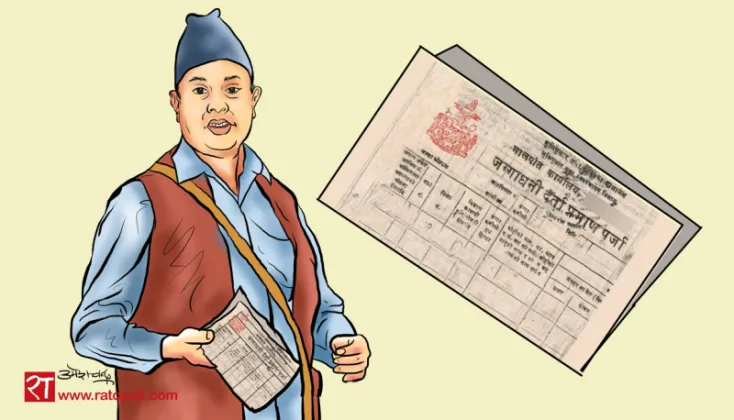
The District Land Problem Resolution Committee in Dang has distributed land ownership certificates to eight families who had spent years living on and using land without any legal title to it, formally recognizing their ownership. Five of the eight beneficiaries are landless Dalit families who previously lived in Gobardiha VDC Ward No. 6, an area that now falls under Gadhawa Rural Municipality Ward No. 3 following Nepal's local-level restructuring. The certificates were handed over by the committee itself, the body mandated to resolve land-related problems across the district, in a move that ends a long period of uncertainty for the households involved. The development, reported by RatoPati, is a small but meaningful milestone in Nepal's broader effort to bring landless families into the formal land-record system.
Years of Insecurity Give Way to Legal Recognition
For the eight recipient families, the certificate, commonly known in Nepal as the lalpurja, converts years of de facto residence into legally recognized ownership. Until now, the families occupied their land without documents proving that it belonged to them, leaving them in a precarious position despite often having lived on and worked the land for a long time.
The certificates were handed over by the District Land Problem Resolution Committee, which works to resolve land-related problems in Dang. While such distributions are part of the committee's routine mandate, each handover carries enormous practical weight for the families concerned, because a title deed is the key that unlocks a range of rights and services that undocumented occupants simply cannot access.
With a registered ownership certificate in hand, a landholder can typically:
- Sell, mortgage, or transfer the property as a legally recognized asset
- Use the land as collateral when applying for loans from banks and cooperatives
- Qualify for housing support, agricultural credit, and disaster-related assistance tied to registered landholdings
- Defend the plot against boundary disputes, encroachment, and threats of eviction
For families who previously had no paperwork at all, these are not abstract benefits. They determine whether a household can borrow money to invest in farming, rebuild a damaged home, or pass property on to the next generation without conflict.
Dalit Families at the Center of the Distribution
Five of the eight families who received certificates belong to the Dalit community, one of the groups most acutely affected by landlessness in Nepal. These families previously lived in Gobardiha VDC Ward No. 6, an administrative area that has since been absorbed into Gadhawa Rural Municipality Ward No. 3. The change of name on official records reflects a nationwide restructuring, but on the ground the underlying problem remained the same: families living on land they could not legally claim as their own.
The fact that a majority of the beneficiaries in this distribution are Dalit families underscores a long-standing pattern in Nepal's land system. Landlessness and insecure tenure have historically fallen hardest on Dalit and other marginalized communities, many of whom worked land belonging to others or settled on plots without ever obtaining formal documents. Because land ownership in Nepal is closely tied to social standing, creditworthiness, and political voice, the absence of a title has consequences that go well beyond property rights.
For Dalit households in particular, a land ownership certificate can serve as a form of social protection. It provides a measure of security against displacement, strengthens claims to government support programs, and offers a tangible acknowledgment of a community's right to a place of its own. The Dang committee's decision to prioritize these families in its distribution therefore carries significance beyond the eight deeds themselves.
The Committee Behind the Handover
The District Land Problem Resolution Committee exists to address exactly the kind of situation seen in this case. Such district-level bodies are tasked with resolving land-related problems within their jurisdictions, and their work typically involves identifying families who lack legal ownership of the land they occupy, verifying their claims, and facilitating the issuance of formal ownership certificates in coordination with local authorities.
Dang, a district in Lumbini Province, has a mixed landscape of plains and hills where questions of land tenure have remained sensitive for decades. Committees of this kind serve as the interface between landless families and the state's land administration system, turning long-unresolved cases into documented ownership. The handover to the eight families in Gadhawa Rural Municipality is an example of that process working as intended, moving cases from the ambiguous category of landless occupancy into the formal register of legal landholders.
Why a Document Carries So Much Weight
Nepal has grappled with landlessness for generations, and successive governments have pursued various programs to identify landless families and provide them with legally recognized land. In a country where a large share of the population depends on agriculture and where land remains the principal household asset, the difference between holding a title and holding none is often the difference between economic mobility and stagnation.
The distribution in Dang adds to that broader, continuing effort. For the eight families, five of them Dalit households from the former Gobardiha VDC, the certificate is more than a piece of paper. It is a formal statement from the state that the land they live on is theirs, an end to years of legal invisibility, and a foundation on which they can now build credit, security, and long-term stability. For the wider campaign to resolve landlessness in the district, the handover stands as a reminder of how consequential even a small number of resolved cases can be for the families involved.


