
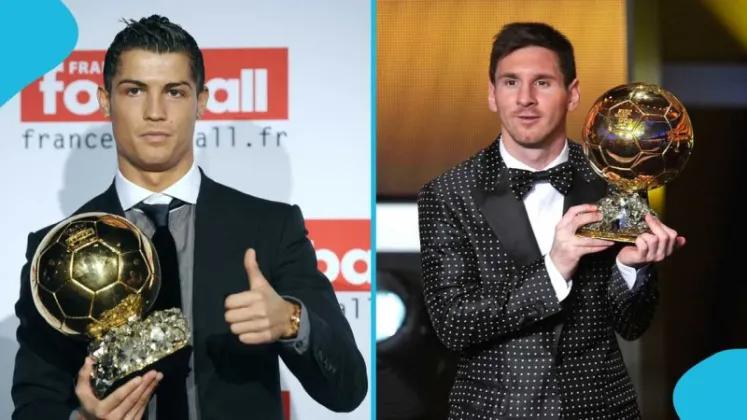
Cristiano Ronaldo has won the first edition of the Ballon d’Or of All Time (BOT), edging out his long-time rival Lionel Messi, according to a report from Kathmandu on October 29, 2026. The award recognises Ronaldo’s 2008 performance for Manchester United as the greatest in the history of the prestigious football honour, placing that season at the top of the new all-time distinction.
Ronaldo’s 2008 season takes the top spot
The inaugural BOT award is centred on performances associated with the Ballon d’Or, and its first result has gone to Ronaldo for his work with Manchester United in 2008. Rather than recognising a new achievement from the current season, the award looks back across the history of the honour and identifies one performance as the standout. Ronaldo’s 2008 campaign was selected for that distinction.
The result gives the recognition to a particular season, not simply to a player’s career as a whole. In this case, the award singles out Ronaldo’s performance for Manchester United and describes it as the greatest in the history of the prestigious football honour. That focus makes the first BOT winner a choice between celebrated individual performances across time, with Ronaldo’s 2008 showing placed first.
The award’s name also signals the scale of its ambition: it is intended to look across the full history of the Ballon d’Or rather than identify a winner for just one year. The inaugural decision therefore establishes Ronaldo’s 2008 performance as the benchmark for the new all-time award. The report does not provide further details about how the winner was selected, but it identifies Ronaldo as the recipient and Messi as the rival he edged out.
Messi rivalry adds significance to the result
Ronaldo’s win came ahead of Messi, his arch-rival, giving the announcement an added dimension for followers of the two players. Their names are closely linked in discussion of football’s leading individual honours, and the BOT result places Ronaldo ahead in this particular contest. The outcome is specific to the new award and its recognition of the 2008 Manchester United performance; it does not, by itself, provide a broader comparison of either player’s career.
The narrow framing matters. The announcement is about which performance the award recognises as the greatest in the history of the honour, not a claim that one player has prevailed in every measure of football achievement. Ronaldo’s selection is tied to the season identified by the award, while Messi is noted as the contender he beat. No further ranking, voting margin or selection process is included in the available report.
An inaugural award sets a historical benchmark
As the first recipient, Ronaldo gives the BOT award its opening reference point. Future editions or discussions of the distinction can be measured against the choice announced in its first year: his 2008 performance for Manchester United. The decision also highlights the central challenge of an all-time award - comparing performances from different periods and selecting one as the most significant. The report provides the result, but not details of the criteria used to make that comparison.
For Ronaldo, the recognition adds an all-time distinction to the record of his 2008 campaign. For Messi, the outcome marks a defeat in a contest that brings their rivalry into the award’s historical framing. The announcement does not give additional information about the event or the award’s organisers, so the significance reported rests on the result itself: Ronaldo won the inaugural BOT award, and his Manchester United performance from 2008 was named the greatest in the history of the prestigious honour.
The news was reported from Kathmandu on October 29, 2026. With its first winner named, the Ballon d’Or of All Time has begun with a clear choice: Ronaldo’s 2008 performance takes the distinction ahead of Messi in the award’s inaugural edition.


