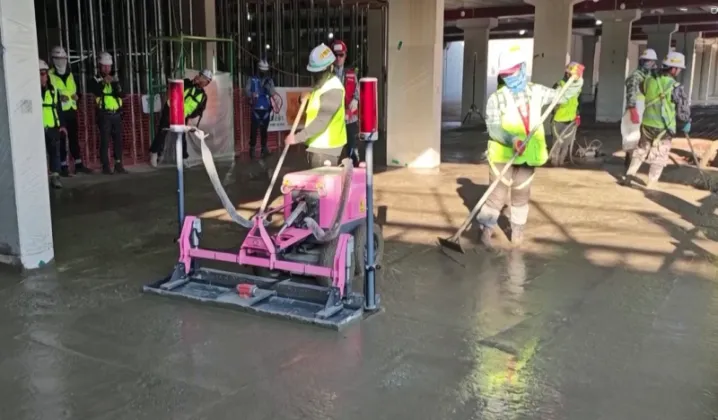
China is steadily expanding the use of robots across its construction industry, with machines now carrying out tasks that range from cleaning the glass facades of tall buildings to tying steel rods at building sites, according to recent reports. The developments, also carried by Nepali media, point to a growing role for automation in a sector that has long depended on manual labour. In the southern Chinese city of Guangzhou, robots are already at work on the exteriors of buildings, offering one of the clearest examples of how automation is moving beyond factory floors and into live construction environments.
Robots Go to Work on Building Exteriors
Among the most striking applications described in the reports is the use of robots to clean the glass facades of tall buildings. Maintaining the exterior glass of high-rise structures has traditionally required workers to operate at significant height, often alongside the very buildings they are cleaning. In Guangzhou, a major city in southern China, robots are now being used on the exteriors of buildings, taking on some of this demanding external work.
The deployment in Guangzhou stands out because it involves work on occupied urban buildings rather than enclosed test facilities. According to the reports, the use of robots on building exteriors there reflects a broader push to bring automation into construction-related tasks that were previously carried out almost entirely by people.
The tasks being handed over to machines are varied, but the reports highlight two main areas:
- Facade cleaning: robots cleaning the glass exteriors of tall buildings, work that has traditionally been performed by workers at height.
- Steel rod tying: robots fastening steel reinforcement rods together on construction sites, a routine part of building reinforced concrete structures.
Together, these applications show robots operating both in the air, on the sides of buildings, and on the ground, at the heart of active construction sites.
From Facades to Foundations: Robots on the Construction Site
The second application highlighted in the reports concerns work on the ground rather than at height. At construction sites in China, robots are being used to tie steel rods, a task central to the construction of reinforced concrete buildings. Steel rods must be fastened together to form the reinforcement framework that gives concrete structures their strength, and the job is repetitive and physically demanding for the workers who perform it.
By handing this kind of work to machines, the reports indicate, China's construction sector is extending automation into the core activities of building itself. Facade cleaning and steel rod tying differ in almost every respect, from the environment in which they take place to the skills they demand, yet both are now being handled by robots. That range suggests the technology is being applied broadly across the industry rather than confined to a single niche task.
Automation's Growing Footprint in Construction
The central theme running through the reports, as covered by Nepal Views and Global Aawaj, is the growing role of automation in China's construction industry. Rather than describing a single pilot project, the coverage points to a pattern: robots are being used across a range of construction-related tasks, and their presence is becoming increasingly common.
Construction has often been regarded as one of the more difficult industries to automate, because sites are constantly changing, the work is varied, and conditions differ from one project to the next. The reported deployments in China, from the exteriors of high-rise buildings in Guangzhou to steel rod tying on active sites, show machines being adapted to exactly these kinds of complex, real-world environments.
Why the Shift Matters
The expansion of robot use in construction carries significance on several levels:
- Safety: cleaning the glass facade of a tall building involves working at height, among the more hazardous jobs associated with large structures. Robots performing exterior work can reduce the need for people to be positioned alongside high-rise buildings.
- Labour: steel rod tying is a repetitive, physically strenuous task, and automating it suggests machines are being directed at routine work that absorbs considerable time and effort on site.
- Scale: China's construction industry is vast, and the growing use of robots for tasks such as facade cleaning and steel rod tying points to automation becoming a routine feature of how buildings are built and maintained.
The reports do not specify how widely these robots have been deployed or which companies are behind the technology. What they do make clear is the direction of travel. From cleaning the glass towers of Guangzhou to tying steel rods on construction sites, robots are taking on an expanding share of the work involved in building and maintaining China's cities, and the reports suggest that the role of automation in the sector is only set to grow.