
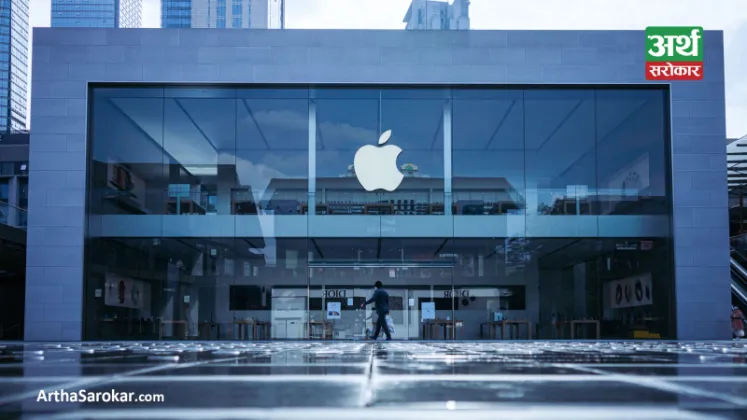
Apple has overtaken Nvidia to once again become the world's most valuable company, a milestone that underlines shifting momentum at the very top of global markets. According to a report published by Arthasarokar, citing Bloomberg, Apple's market capitalisation reached 5.03 trillion dollars, while Nvidia's valuation slipped to 4.93 trillion dollars. The change at the top, reported in November 2026, follows strong consumer interest in Apple's newest products, most notably the company's first foldable iPhone, even as investors continue to voice concern about whether heavy spending on artificial intelligence will deliver adequate returns.
The exchange of positions between the two technology heavyweights caps a long-running contest for the crown. Apple's return to the number one spot reflects renewed confidence in the iPhone maker's product cycle, while Nvidia's slip from the summit marks a notable moment for the chipmaker whose fortunes have been closely tied to the artificial intelligence boom.
A Narrow Lead With Outsized Symbolism
The gap separating the two companies is slim. Apple's 5.03 trillion dollar valuation stands roughly 100 billion dollars above Nvidia's 4.93 trillion dollars, a difference of about two percent of Apple's own market value. For companies that trade at this scale, daily swings of tens of billions of dollars are routine, which means the top spot could easily change hands again in future trading sessions.
The symbolism of the milestone, however, is considerable. Market capitalisation, the combined value of a company's outstanding shares, is the most widely cited measure of corporate size, and the firm holding the top position is often regarded as the defining enterprise of its era. For Apple, regaining the title represents a return to familiar ground. For Nvidia, losing it ends a stretch in which the company sat at the top of the market, a position built during a period when demand for its chips surged alongside the global race to develop artificial intelligence.
Key figures at a glance
- Apple market capitalisation: 5.03 trillion dollars
- Nvidia market capitalisation: 4.93 trillion dollars
- Gap between the two: roughly 100 billion dollars
- Catalyst: strong consumer interest in Apple's new products, including the first foldable iPhone
- Ongoing concern: returns on heavy AI investments across the industry
Consumer Demand Powers Apple's Rise
According to the report, Apple's rise was propelled by robust consumer interest in the company's new products. Chief among them is Apple's first foldable iPhone, a device that marks the company's entry into a product category that has drawn growing attention across the smartphone industry. Foldable handsets, which can unfold to offer larger displays while remaining pocketable, have been promoted as a frontier in phone design, and the arrival of Apple's own version has attracted significant attention from buyers and investors alike.
The strong consumer response has coincided with a rise in Apple's market value, helping the company overtake Nvidia and reclaim the top position. For a company whose business rests so heavily on consumer hardware, the reception given to a new product cycle carries substantial weight, and the enthusiasm surrounding the foldable iPhone has provided the immediate catalyst for Apple's climb back to number one.
AI Investment Concerns Linger Over the Milestone
Even as Apple claimed the top spot, the report highlights a persistent anxiety in the market: investors remain concerned about the returns on heavy investments in artificial intelligence. Across the technology sector, companies have committed enormous sums to developing AI products and building the infrastructure required to run them, and the question of when, and how fully, those outlays will pay off has become a central theme for global markets.
That concern has created a more demanding environment for valuations across the industry, with investors increasingly looking for evidence that AI spending is generating tangible revenue and profit rather than remaining an expensive long-term bet. Against that backdrop, Apple's strength with consumers has offered a contrast. Demand for its new products represents revenue materialising now, in the form of device sales, rather than promised returns on infrastructure that is still being built.
What the Shift Means for Global Markets
The changing of the guard at the top encapsulates the crosscurrents running through today's technology market. Nvidia's ascent reflected the extraordinary investment flowing into artificial intelligence and the semiconductors that power it. Apple's resurgence reflects the enduring power of consumer brands and product demand. That the two companies now sit within roughly 100 billion dollars of each other, trading places at the summit, illustrates how finely balanced investor sentiment has become between the promise of AI and the realities of the consumer economy.
For now, Apple holds the crown. Whether it keeps it may depend on how durable the enthusiasm for its foldable iPhone and other new products proves to be, and on whether the industry's vast AI investments begin to show the returns investors are waiting for. Given how narrow the margin between the two companies is, both questions are likely to be watched closely in the days ahead.


